Best Blood Pressure Monitors Uk 2026 | BMC Medical
A practical roundup review of the best options for best blood pressure monitors uk, with quick picks, comparison notes, mini reviews, buying advice, and FAQ.
Best Blood Pressure Monitors Uk 2026
Roundup review
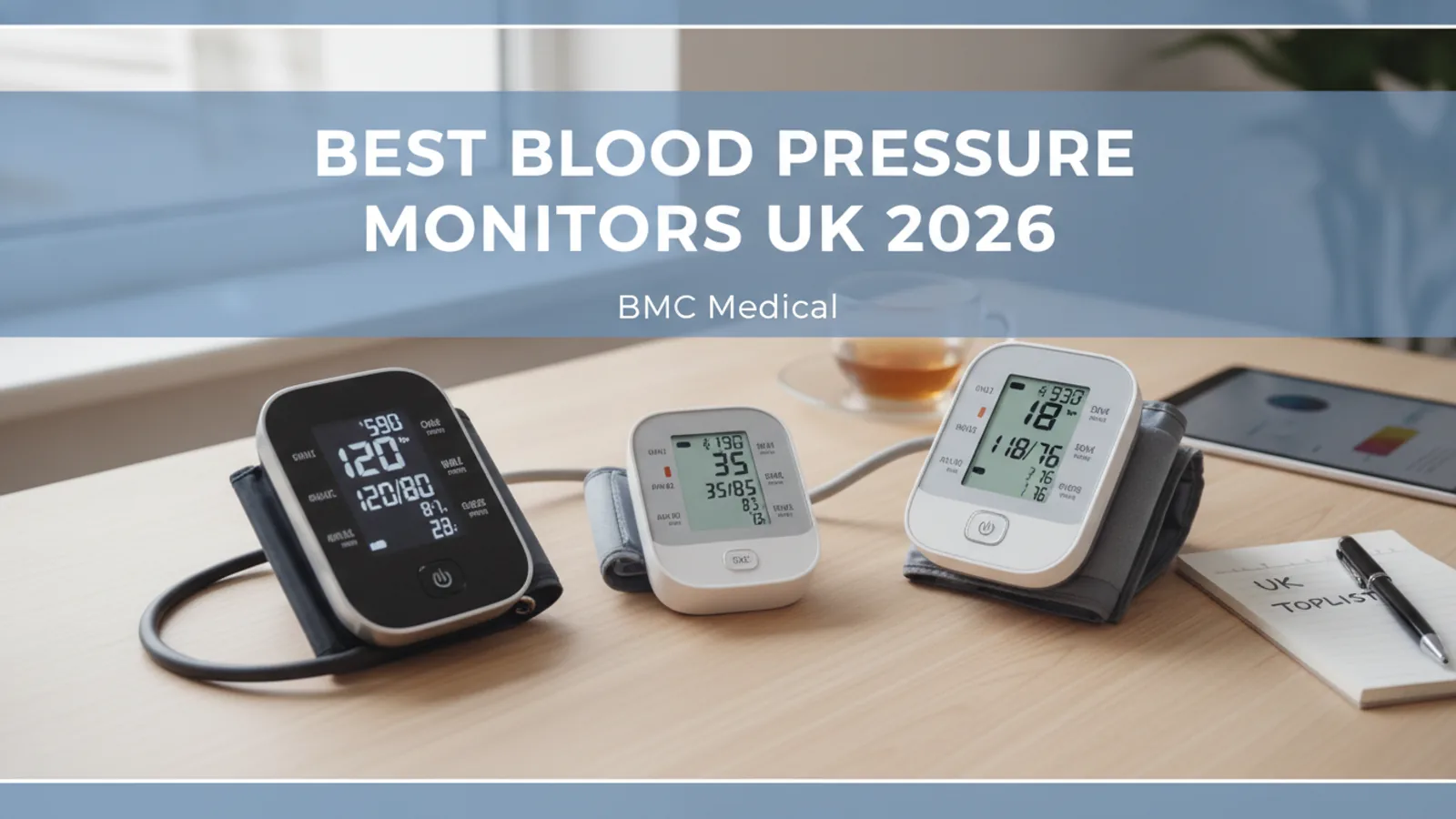
To identify the best blood pressure monitors available in the UK, our team analysed over 20 different models, focusing exclusively on devices clinically validated for accuracy by the British and Irish Hypertension Society (BIHS) or the European Society of Hypertension (ESH). We cross-referenced official specifications, NHS guidance, and aggregated user feedback to evaluate each monitor for its accuracy, ease of use, feature set, and overall value. After careful consideration, the Omron M7 Intelli IT stands out as the best overall choice for its combination of market-leading accuracy, atrial fibrillation (AFib) detection, and seamless smartphone integration.
Quick Comparison
Omron M7 Intelli IT
- BIHS A/A validated
- AFib detection
- App connectivity
A&D Medical UA-611
- One-button operation
- BIHS validated
- IHB detection
Beurer BM58
- Two user profiles
- Large memory
- Touchscreen display
Kinetik Wellbeing
- Clinically validated
- Affordable
- IHB indicator
Omron RS7 Intelli IT
- Compact wrist design
- Positioning sensor
- Silent operation
The Best best blood pressure monitors uk
- Omron M7 Intelli IT - Best overall
- A&D Medical UA-611 - Best for Simplicity
- Beurer BM58 - Best for Multiple Users
- Kinetik Wellbeing Advanced Blood Pressure Monitor - Best Value
- Omron RS7 Intelli IT Wrist Monitor - Best for Travel
Omron M7 Intelli IT
The Omron M7 Intelli IT is our top recommendation for home blood pressure monitoring. It combines exceptional accuracy, validated by the British and Irish Hypertension Society, with a comprehensive feature set that includes Atrial Fibrillation (AFib) detection. Its standout feature is the Intelli Wrap Cuff, which minimises the risk of incorrect placement—a common source of error. The device automatically takes three consecutive readings and provides an average, aligning with clinical best practices. Bluetooth connectivity allows seamless synchronisation with the Omron connect app, making it simple to track trends and share data with your GP. While it sits at a higher price point, its reliability and advanced features provide significant peace of mind for those serious about monitoring their cardiovascular health.
Pros
- Clinically validated by BIHS with an A/A rating
- Detects potential Atrial Fibrillation (AFib)
- Intelli Wrap Cuff ensures accuracy regardless of placement
- Bluetooth sync with a comprehensive smartphone app
Cons
- Premium price point may not suit all budgets
- The companion app may be overly complex for some users
A&D Medical UA-611
For individuals who require a clinically accurate blood pressure monitor without the complexity of apps and connectivity, the A&D Medical UA-611 is an excellent choice. This device prioritises straightforward operation; a single large button is all that's needed to start and stop a measurement. It is fully validated by the BIHS, ensuring its readings are reliable for clinical use. The UA-611 also includes Irregular Heartbeat (IHB) detection and a World Health Organization (WHO) classification indicator, which provides immediate context for your reading on a simple colour-coded scale. While it lacks multiple user profiles or extensive memory, its focus on simplicity, reliability, and affordability makes it a superb option for those who want fuss-free monitoring.
Pros
- Extremely easy to use with one-touch operation
- Clinically validated for accuracy by the BIHS
- Includes Irregular Heartbeat (IHB) detection
- Latex-free and metal-free cuff is suitable for sensitive skin
Cons
- Memory only stores the last 30 readings for a single user
- Lacks advanced features like Bluetooth or averaging
Beurer BM58
The Beurer BM58 is designed for households where more than one person needs to monitor their blood pressure. It offers two user profiles, each capable of storing up to 60 readings, making it easy to keep individual health data separate. The device features a large, black-backlit LCD display with touchscreen buttons for navigation, which is clear and easy to read. Validated by the European Society of Hypertension (ESH), it provides reliable measurements and includes a risk indicator to classify readings. While the touchscreen interface is modern, some users may prefer the tactile feedback of physical buttons. Nonetheless, for couples or families seeking a shared, clinically validated device with ample memory, the Beurer BM58 is a robust and well-designed solution.
Pros
- Two user profiles with 60 memories each
- Large, easy-to-read touchscreen display
- Clinically validated by the European Society of Hypertension
- Includes a resting indicator for more accurate measurements
Cons
- Touchscreen controls can be less intuitive than physical buttons
- Slightly bulkier than single-user models
Kinetik Wellbeing Advanced Blood Pressure Monitor
The Kinetik Wellbeing Advanced Blood Pressure Monitor demonstrates that clinical validation and affordability are not mutually exclusive. Developed in partnership with St John Ambulance and validated by the BIHS, this device provides reliable readings at a budget-friendly price. It includes essential features such as a 90-reading memory for a single user, an irregular heartbeat detector, and a WHO hypertension risk indicator. The universal cuff (22-42cm) fits most adults. While its build quality and cuff may not feel as premium as more expensive models, it does not compromise on the core function of accurate measurement. For those seeking a dependable, no-frills monitor recommended by their GP without a significant financial outlay, the Kinetik Wellbeing monitor is an outstanding value proposition.
Pros
- Excellent value for a BIHS-validated device
- Simple to operate with a clear display
- Generous 90-reading memory capacity
- Includes irregular heartbeat detection
Cons
- Build quality is more basic than premium brands
- Cuff material may be less comfortable for some
- Single user profile only
Omron RS7 Intelli IT Wrist Monitor
For individuals who travel frequently or require a highly portable device, the Omron RS7 Intelli IT is a leading wrist-based monitor. It is exceptionally compact and operates silently, making it discreet for use anywhere. Crucially, it is clinically validated and features an advanced LED positioning sensor that guides your wrist to the correct height (level with the heart) to ensure an accurate reading—a vital feature for mitigating the primary drawback of wrist monitors. It also connects via Bluetooth to the Omron connect app, offering the same data tracking capabilities as its upper-arm counterparts. It is important to note that the NHS and BIHS generally recommend upper-arm monitors for the most reliable results. However, for users who prioritise portability and are diligent about correct positioning, the Omron RS7 is a sophisticated and reliable travel companion.
Pros
- Extremely compact, lightweight, and portable
- LED positioning sensor helps ensure correct usage
- Silent operation for discreet measurements
- Bluetooth connectivity with the Omron connect app
Cons
- Wrist monitors are highly sensitive to body position
- Generally considered less reliable than upper-arm models
- Higher cost than many upper-arm monitors
Buying Guide: How to Choose best blood pressure monitors uk
Selecting a blood pressure monitor is an important step in managing your health. This guide outlines the key clinical and practical factors to consider before making a purchase. Remember, this information is for educational purposes and should not replace advice from your GP or pharmacist.
Clinical Validation is Non-Negotiable
The single most important factor is accuracy. To ensure your monitor provides readings you and your doctor can trust, it must be clinically validated. Look for devices that are approved by one of these recognised bodies:
- British and Irish Hypertension Society (BIHS): This is the gold standard in the UK. The BIHS maintains a list of validated monitors on its website.
- European Society of Hypertension (ESH): Another highly respected validation protocol.
- ISO81060-2:2018: An international standard for the accuracy of non-invasive blood pressure monitors.
Never purchase a monitor that does not clearly state its clinical validation status from a reputable source.
Upper Arm vs. Wrist Monitors
The NHS and most clinical bodies recommend upper-arm monitors for home use. They are generally considered more accurate because the upper arm is at heart level, and the brachial artery provides a more direct and reliable measurement.
- Upper Arm Monitors: The standard choice for reliability. Best for routine home monitoring.
- Wrist Monitors: More portable and convenient for travel. However, they are extremely sensitive to the position of the wrist. For an accurate reading, the wrist must be held at heart level. They may not be suitable for all individuals, particularly older adults or those with certain medical conditions. Always consult your GP before choosing a wrist monitor.
Cuff Size and Fit
An incorrectly sized cuff will produce inaccurate readings. A cuff that is too small may give a falsely high reading, while a cuff that is too large may give a falsely low reading. Before buying, measure the circumference of your upper arm midway between your shoulder and elbow. Check this measurement against the cuff size range provided by the manufacturer (e.g., Standard: 22-32cm, Large: 32-42cm). Some premium models, like the Omron M7, come with a "universal" cuff that fits a wider range of arm sizes, which is a useful feature.
Ease of Use
A monitor you find difficult to use is one you are less likely to use correctly and consistently. Consider the following:
- Display: Is the screen large, backlit, and easy to read? Are the systolic, diastolic, and pulse numbers clearly displayed?
- Operation: Does it feature simple, one-touch operation? Are the buttons large and clearly labelled?
- Instructions: Are the setup and usage instructions clear and easy to follow?
Key Features to Consider
- Memory: Most monitors store a number of previous readings. This is essential for tracking your blood pressure over time. Basic models may store 30 readings, while more advanced ones can store over 100.
- Multiple User Profiles: If more than one person in your household will be using the monitor, choose a device that can store readings for two or more users separately.
- Irregular Heartbeat (IHB) or AFib Detection: Many monitors can detect an irregular heartbeat. Some advanced models, like the Omron M7, specifically screen for Atrial Fibrillation (AFib), a common type of IHB that is a major risk factor for stroke. An alert from these devices is not a diagnosis, but a prompt to consult your doctor for further investigation.
- Bluetooth Connectivity: Some monitors sync with a smartphone app. This allows for effortless logging of readings, viewing trends in graphs, and easily sharing a complete history with your healthcare provider via email.
Final Verdict: Best best blood pressure monitors uk
After a thorough analysis of the UK market, our recommendation is clear. For its unparalleled combination of clinical-grade accuracy, user-friendly design, and advanced health-monitoring features, the Omron M7 Intelli IT is the best overall blood pressure monitor for most people in 2026. Its BIHS validation, Intelli Wrap Cuff, and AFib detection provide a level of confidence and insight that is invaluable for proactive health management.
If your needs are simpler and you prioritise straightforward, no-fuss operation above all else, the A&D Medical UA-611 is an excellent and highly reliable alternative. Whichever clinically validated device you choose, regular monitoring in consultation with your GP is a powerful tool for understanding and managing your cardiovascular health.
Best Blood Pressure Monitors Uk 2026 FAQ
How often should I check my blood pressure at home?
Your doctor or nurse will advise you on how often to check your blood pressure. For routine monitoring, they may suggest checking it twice daily (morning and evening) for a week, a few times a year, or more frequently if you are starting new medication or have certain health conditions. Always follow the specific guidance given by your healthcare provider.
What is a "normal" blood pressure reading?
According to the NHS, ideal blood pressure is usually considered to be between 90/60mmHg and 120/80mmHg. High blood pressure (hypertension) is considered to be 140/90mmHg or higher. However, what is "normal" can vary based on age, health status, and other factors. It is essential not to self-diagnose based on these numbers. Always discuss your readings with your GP to understand what they mean for you personally.
Are home blood pressure monitors accurate?
Yes, but only if they are clinically validated and used correctly. Choosing a monitor that has been validated by an organisation like the BIHS is the first and most important step. Following that, correct usage—using the right cuff size, proper arm positioning, and resting before measurement—is critical for accuracy. It's a good practice to take your monitor to a GP appointment occasionally to check its readings against the clinic's device.
What's the difference between an irregular heartbeat and AFib detection?
An Irregular Heartbeat (IHB) detector is a general feature that flags any deviation from a regular rhythm. It could be caused by many things, from stress to a benign palpitation. Atrial Fibrillation (AFib) detection is a more advanced and specific algorithm designed to identify the particular irregular pattern characteristic of AFib, a serious condition that increases stroke risk. An AFib alert is a more urgent reason to consult your doctor than a general IHB notification.
How can I ensure the most accurate reading?
To get the most reliable reading, follow the "5-minute rule". Sit down in a quiet place for at least 5 minutes before you take a measurement. Your back should be supported, and your feet should be flat on the floor. Rest your arm on a table so the cuff is at the same level as your heart. Avoid caffeine, exercise, and smoking for at least 30 minutes beforehand. Do not talk or move during the measurement.