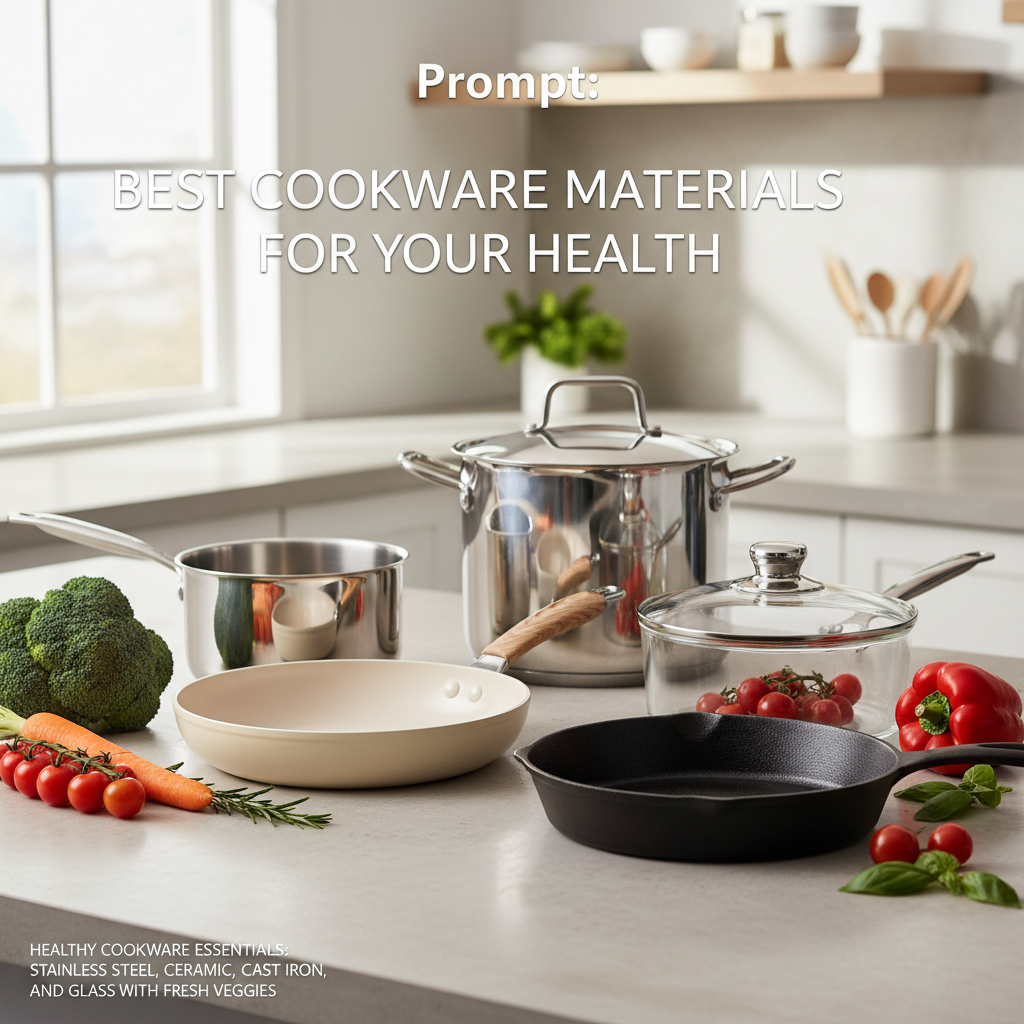
Quick Overview – Safest Cookware Materials in 2026
Editor’s Top 3 Picks for Healthy Cookware
- Glass: Fully inert, zero leaching, ideal for storage and baking. Example: CorningWare
- High-Quality Stainless Steel (304/316 grade): Non-toxic, durable, oven-safe, nickel-free options available for sensitive users.
- 100% Pure Ceramic: Third-party tested, no heavy metals or PFAS, excellent for all stovetops. Example: Xtrema
What’s New in 2026: Latest Research & Trends
- PFOA/PTFE-free nonstick remains top concern; PFOA detected in one 2025 PTFE pan even when labeled “PFOA-free”.
- Lead leaching from imported aluminum and alloy pans confirmed by FDA in 2025
- Titanium and ceramic innovations show highest nutrient retention in food (peer-reviewed validation)
Why Cookware Material Matters for Health
Common Toxins in Traditional Cookware (2026 Update)
- Lead: Found in some imported alloy/aluminum pans; confirmed poisonous in FDA 2025 studies; avoid products like Hindalium alloys.
- PFAS (PTFE/PFOA): Detected in 79% of nonstick and 20% of baking pans. Linked to liver disease, cancer; not always disclosed, so “PFAS-free” may be misleading.
- Cadmium: Occasionally in low-grade metal cookware; linked to kidney damage and cancer risk.
How Cookware Materials Impact Nutrient Retention & Taste
- Titanium cookware retains up to 85.67% potassium and maintains protein/fiber profiles closest to raw food, according to multicenter food studies (2020-2025).
- Enamel-coated and ceramic pots also outperform aluminum and stainless steel in micronutrient retention.
- Nonstick chemicals (PFAS) can migrate into food, adding chemical exposure and sometimes subtly altering taste profiles.
Top 7 Best Cookware Materials for Health: Pros, Cons & Science
Stainless Steel – The Balanced Choice
- Pros: Minimal leaching (especially 304/316/439 grades), corrosion-resistant, oven-safe to 800°F, induction-compatible, recyclable.
- Cons: Trace nickel leaching possible; avoid if nickel-allergic. Not naturally nonstick.
- Health Impact: Overall safe; trace metals well below risk thresholds (peer-reviewed confirmation).
Cast Iron – Great for Iron Intake
- Pros: Naturally PFAS-free, enhances dietary iron, excellent heat retention, durable (lifetime use common).
- Cons: Heavy, needs seasoning, not ideal for acidic dishes (strips seasoning).
- Health Impact: Increases iron in food—a benefit for deficiency, caution for iron overload/kidney issues.
Ceramic – No Heavy Metals, Modern Advances
- Pros: PFAS/PFOA/PTFE/lead/cadmium-free, third-party tested, nonstick when new, inert to acids and alkalis.
- Cons: Coatings can degrade over time; avoid dishwasher for longevity.
- Health Impact: Non-leaching; fully safe for all users if certified.
Carbon Steel – Safe for Most Homes
- Pros: PFAS-free, lighter than cast iron, builds natural nonstick via seasoning, high-heat tolerant.
- Cons: Requires seasoning, rusts if not kept dry, initial reactivity with acidic foods.
- Health Impact: Inert when seasoned, low leaching risk.
Glass – Emerging Non-Toxic Alternative
- Pros: Fully non-reactive, zero chemicals, safe for baking/storage, easy to clean.
- Cons: Prone to shattering under thermal shock; less versatile for high-heat stovetop use.
- Health Impact: Safest profile, no leaching even after long-term use.
Titanium & Titanium-Coated – 2026’s Latest Entrant
- Pros: Maximizes nutrient retention in food (best in peer-reviewed comparative studies), non-reactive, durable.
- Cons: Less common; expensive; some titanium cookware is merely coating, so check manufacturer specs for solid vs. coated.
- Health Impact: No known risks, excellent for nutrient preservation.
Enamel & Other Niche Materials
- Pros: Lead/cadmium-free enamel over cast iron/steel creates a durable, non-reactive, easy-clean surface.
- Cons: Lower-quality enamels can chip; verify “lead-free” status.
- Health Impact: Prevents metal leaching; requires quality assurance.
Cookware Guide for Special Health Needs
For Pregnancy, Children & Seniors
- Choose stainless steel, lead-free ceramic, or glass to avoid PFAS/lead and heavy metals. Certified products are crucial for fetal and child development.
- Seniors benefit from lightweight carbon steel or stainless; avoid cast iron if anemia is not a concern.
Managing Allergies & Sensitive Conditions
- Nickel allergy: Choose low-nickel stainless or glass/ceramic.
- Multiple chemical sensitivities: Pure ceramic, glass, or certified lead/cadmium-free enamel.
Kidney or Iron Disorders: What to Choose or Avoid
- Avoid cast iron if you have iron overload or advanced kidney disease.
- Prefer stainless steel, glass or ceramic, which do not impact iron levels.
Vegan & Eco-Conscious Options
- All major safe materials are vegan-friendly.
- Cast iron increases iron intake from plant foods (a plus for vegans).
- Favor recycled and recyclable brands and manufacturing processes.
Environmental Impact: The Greenest Healthy Cookware
Materials Ranked by Sustainability & Safety
- Cast iron & carbon steel: Most sustainable/longevous; lifetime durability, recyclable, no coatings.
- Pure iron (e.g., Skeppshult): Designed for lifelong/“forever” use, 100% recyclable, minimal processing impact.
- Stainless steel: Very durable, recyclable; production has higher energy cost, but longevity offsets.
- 100% ceramic & glass: Eco-friendly if recycled content, safest for environment/health; less durable (especially glass).
Eco Certifications & Lifespan (2026 Review)
- Milo by Kana (cast iron): Partially recycled, lifetime warranty
- Xtrema (ceramic): Third-party heavy metal tested, meets Prop 65 (California) standards
- Most “green” cookware lacks independent eco certifications; rely on transparency of lifecycle/ingredients.
Practical Tips: Buying, Using & Caring for Healthy Cookware
What to Check Before You Buy
- Verify material: Look for 304/316/439 stainless, “lead/cadmium-free” certification for ceramics/enamels
- Inspect for PFOA/PFAS/lead/cadmium disclosures; check third-party lab reports where possible
- For stainless steel, ensure multi-ply/triply construction for even heating and durability
- Choose brands with published heavy metal or PFAS testing (e.g., Caraway, Xtrema, Milo)
Safe Usage, Cleaning & Avoiding Leaching
- Hand wash cookware; use gentle scrubbers for coatings/enamel, avoid metal utensils on nonstick/enamel surfaces
- Season cast iron/carbon steel regularly for performance and protection
- Do not overheat nonstick (including ceramic); never exceed 400°F for these coatings
- Replace or discard any cookware with scratched/damaged coatings
When Should You Replace Your Cookware?
- Replace if nonstick/ceramic enamel visibly scratches or peels
- For cast iron and carbon steel, re-season or remove rust as needed; replace only if pitted/cracked
- Glass: discard if chipped/cracked to avoid fragments
Cookware Myths Busted: Science vs. Popular Beliefs
Does All Nonstick Equal Toxic?
- Modern PTFE (Teflon) is PFOA-free since 2013 and generally safe below 400°F, but PFAS class chemicals as a group remain a persistent environmental and health concern. Ceramic nonstick is safer but less durable.
Is Cast Iron Always Safe?
- Uncoated cast iron is non-toxic and increases iron intake, but avoid for those with iron disorders; acidic foods can strip seasoning and increase iron leaching. Enamel-coated cast iron is non-reactive if chipping is avoided.
Can Acidic Foods React With All Metals?
- Low-grade aluminum, unlined copper, and new cast iron may leach into acidic foods. High-quality stainless (304/316), glass, and certified ceramics are inert and safe for all recipes.
Comparison Table: Best Cookware Materials for Health (2026)
| Material | Leaching/Toxin Risk | Nutrient Retention | Longevity | Ease of Use | Best for |
|---|---|---|---|---|---|
| Stainless Steel (304/316) | Low (minimal Ni/Cr) | Good | 20+ years | High | All purpose, allergies |
| Cast Iron | Iron leaching (benefit/risk) | Very good | Lifetime | Heavy, needs care | Iron-deficiency, searing |
| Ceramic (100%/lead-free) | None if certified | Excellent | 5–10 years (coating) | Nonstick, gentle care | Sensitive users, baking |
| Carbon Steel | Low (when seasoned) | Very good | 20+ years | Fast, lightweight | Stir fry, high-heat |
| Glass | Zero | Excellent | 5–10 years | Baking, storage | All groups, acid foods |
| Titanium | Zero | Best recorded | 10–20 years | Moderate | Nutrient retention |
| Enamel (lead-free) | None if certified | Good | 10–15 years | Easy clean | Multi-user homes |
FAQ: Choosing the Best Cookware Material for Your Health Needs
- Q: Are all nonstick pans unsafe? A: Most newer pans are PFOA-free, but some PFAS may persist. Ceramic nonstick is safest, but longevity is lower. Always check recent lab reports and avoid overheating.
- Q: What’s the best cookware for babies and pregnancy? A: Choose lead-free glass, 100% ceramic, and high-grade stainless. Avoid anything unverified from unknown sources.
- Q: Does cast iron add iron to food? A: Yes, especially with acidic or moist foods. Safe for most, but avoid for those with iron overload or kidney issues.
- Q: Should I avoid metallic cookware for allergens? A: Opt for glass or certified alloy-specific stainless (e.g., low-nickel) if you have allergies.
- Q: Which is the most sustainable option? A: Cast iron, carbon steel, and glass/ceramic from responsible brands—look for recycled materials and lifetime warranties.
- Q: Where can I buy safe, tested cookware? A: Check brands with published test results—see LeafScore, Organic Authority, Consumer Reports.
Ready to upgrade your kitchen? Explore tested cookware brands and shop for your health and family’s peace of mind.