Compression Socks Safety Guidance Review 2026 | BMC Medical
A practical Compression Socks Safety Guidance review covering verdict, pros and cons, scoring criteria, evidence, buyer fit, and final recommendation.
Compression Socks Safety Guidance Review 2026: Is It Worth It?
Following established safety guidance is non-negotiable for anyone considering compression socks. When used correctly, they are a highly effective, non-invasive tool for managing symptoms of venous insufficiency, reducing swelling, and preventing serious conditions like DVT. The "product" being reviewed here is the body of knowledge and best practices required for safe application.
The primary trade-off is the initial effort required for accurate measurement, pressure selection, and learning proper application techniques. Skipping these steps converts a therapeutic tool into a potential source of harm.
Quick Summary for Skimmers
This is a review of the safety protocols surrounding the use of medical compression hosiery. Our analysis concludes that adherence to this guidance is critical. The effectiveness of compression therapy is entirely dependent on correct sizing, appropriate pressure levels (mmHg), and awareness of contraindications. For individuals with venous health concerns, post-operative recovery needs, or those at risk during long-haul travel, learning and applying these safety principles is an excellent investment in personal health. The risks of improper use—such as restricting circulation or causing skin damage—are significant and easily avoidable by following clinical best practices.
Pros
- Clinically proven efficacy for venous support
- Reduces swelling, aching, and leg fatigue
- Non-invasive, drug-free therapy
- Helps prevent serious conditions like DVT
Cons
- Significant risk of harm if poorly fitted
- Requires precise pressure selection
- Not suitable for certain medical conditions
- Can cause skin irritation or breakdown
Compression Socks Safety Guidance Review: Short Introduction
Compression socks, or graduated compression hosiery, are specialised garments designed to apply gentle pressure to the legs and ankles. This pressure is "graduated," meaning it is tightest at the ankle and gradually decreases up the leg. The mechanism is simple yet effective: it supports the venous system in returning blood towards the heart, reducing swelling (oedema), alleviating tired and aching legs, and lowering the risk of blood clots, such as deep vein thrombosis (DVT).
However, their medical-grade nature means they are not a one-size-fits-all accessory. The safety and effectiveness of compression therapy are entirely contingent on following established clinical guidance. In this 2026 review, we are not evaluating a single brand of sock, but rather the essential body of knowledge—the safety guidance itself—that a user must understand to achieve therapeutic benefits and avoid potential harm. Think of this guidance as the mandatory "user manual" for your circulatory health.
We will assess the critical components of this guidance, from selecting the correct size and pressure level to understanding who should not wear them (contraindications). This article serves as an educational framework to help you use compression socks safely and effectively, in consultation with your healthcare provider.
Correct Sizing and Fitting: The Foundation of Safety
The single most critical factor in compression sock safety is achieving a correct fit. An improperly sized garment can render the therapy ineffective at best, and at worst, can be dangerous. A sock that is too loose will provide no therapeutic benefit, while one that is too tight can act as a tourniquet, impeding blood flow and potentially causing tissue damage, numbness, or tingling. This is the opposite of the intended effect and can exacerbate circulatory problems.
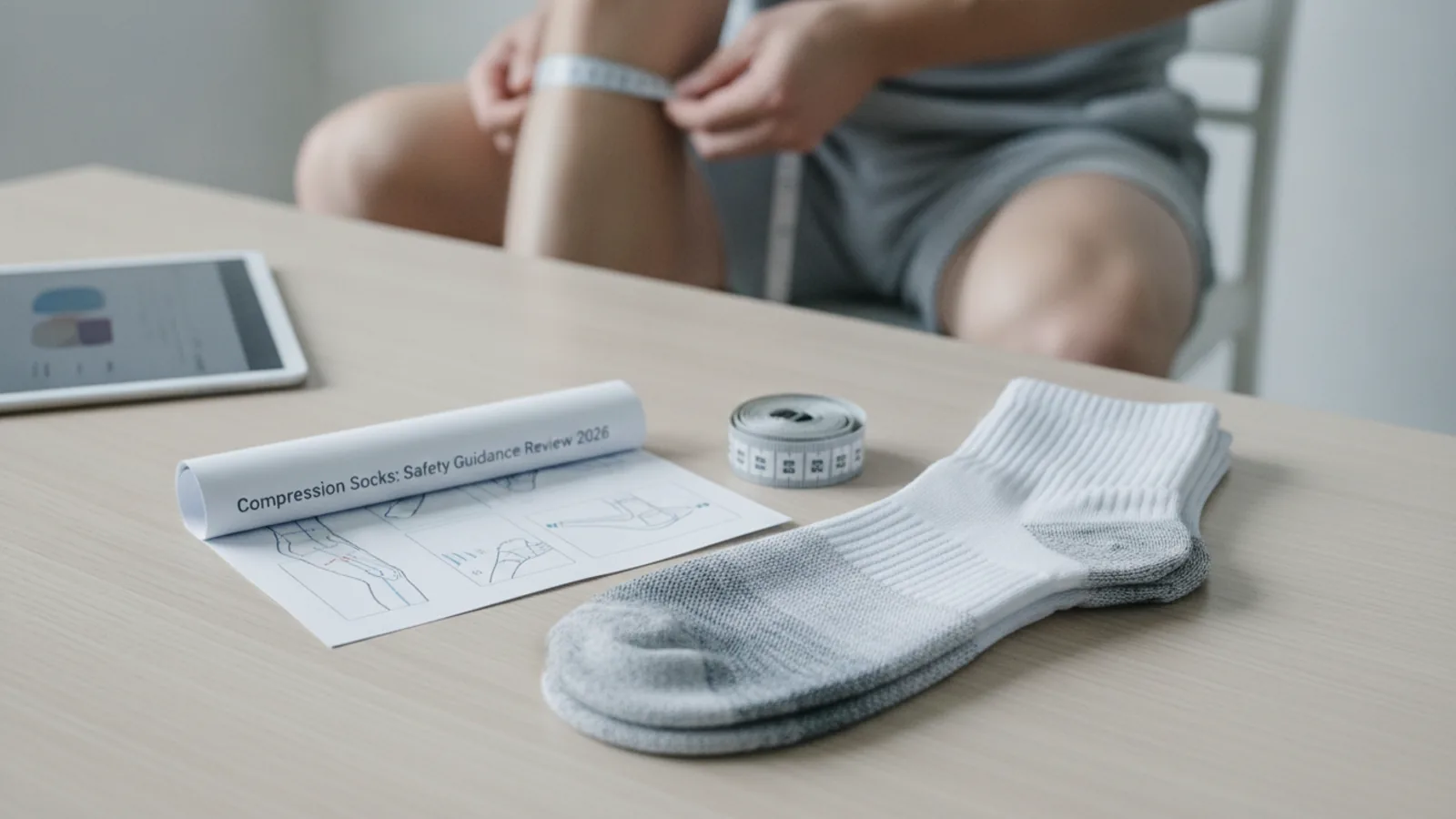
Accurate fitting requires precise measurements. Standard shoe size is rarely sufficient for selecting medical-grade compression. The key measurements are the circumference of the narrowest part of the ankle and the widest part of the calf. For thigh-high stockings, the thigh circumference is also necessary. These measurements should ideally be taken early in the morning, shortly after waking, as legs tend to swell throughout the day, which could lead to an inaccurate (and overly large) size selection.
Each manufacturer provides a sizing chart that correlates these measurements to a specific product size (e.g., Small, Medium, Large, plus variations for calf width). It is imperative to consult this chart for every new brand or style you purchase, as sizing is not standardised across the industry. Ignoring these precise measurements in favour of a guess based on shoe size is the most common and dangerous mistake users make.
Category Score: 95/100
Understanding Compression Levels (mmHg): Clinical Application
The "strength" of a compression sock is measured in millimetres of mercury (mmHg), the same unit used for blood pressure. This denotes the amount of pressure the stocking will apply at the ankle. Choosing the correct compression level is crucial and often requires guidance from a pharmacist, nurse, or doctor, especially for pressures above 20 mmHg.
Compression levels are typically categorised into classes:
- Mild Compression (8-15 mmHg): Often not considered medical grade. Used for relieving tired, aching legs for those who stand or sit for long periods but have no significant venous issues.
- Moderate Compression / Class 1 (15-20 mmHg): The most common level available over-the-counter. Recommended for preventing swelling and DVT during travel, managing minor varicose veins, and for use during pregnancy.
- Firm Compression / Class 2 (20-30 mmHg): Typically requires medical guidance. Used for managing more pronounced varicose veins, post-sclerotherapy, managing active venous ulcers, and for preventing post-thrombotic syndrome.
- Extra-Firm Compression / Class 3 (30-40 mmHg) and above: Strictly available via prescription and fitted by a trained professional. Used for severe conditions like lymphoedema and advanced chronic venous insufficiency.
Selecting a pressure level that is too high without a clinical indication can unnecessarily constrict blood vessels, particularly in individuals with underlying arterial disease. Conversely, a level that is too low for your condition will not provide the necessary support to be effective. The guidance to start with the lowest effective pressure and to seek medical advice for anything beyond Class 1 is a core tenet of safe usage.
Category Score: 90/100
Application and Removal Techniques: Ensuring Daily Compliance
Even with the correct size and pressure, the practical challenge of putting on (donning) and taking off (doffing) compression socks can be a barrier to consistent use. Their tightness makes them fundamentally more difficult to handle than regular socks. Incorrect technique can not only be frustrating but can also damage the expensive garment or even injure the skin, particularly in older adults or those with fragile skin.
The standard technique involves reaching inside the sock, grabbing the heel, and pulling the sock inside-out up to the heel pocket. You then slip your foot in as far as the heel and gradually unroll the rest of the stocking up your leg, smoothing out any wrinkles as you go. Bunching the sock up like a normal sock and trying to pull it on is ineffective and can create tight bands of fabric that constrict circulation.
For individuals with limited strength, mobility, or flexibility, various donning aids are available. These include rubber "donning gloves" that provide a better grip on the fabric, and metal frames or silk slips that help the sock slide over the foot and leg more easily. Learning the proper technique or investing in an appropriate aid is crucial for long-term adherence to compression therapy. The guidance to never fold the top band of the sock over is also critical, as this doubles the pressure at that point and can create a dangerous tourniquet effect.
Category Score: 85/100
Skin Integrity and Hygiene: Preventing Complications
Wearing a tight garment against the skin for extended periods requires careful attention to hygiene and skin health. The fabric can trap moisture, and the pressure can cause irritation, chafing, or even pressure sores if not managed correctly. Safety guidance here is clear: the skin should be clean and completely dry before applying compression socks.
Moisturisers can be used, but it's important to allow them to fully absorb into the skin before putting on the stockings, as emollients can break down the elastic fibres (especially Lycra/elastane) over time. Daily inspection of the skin is recommended. After removing the socks, check for any areas of redness, indentation, or skin breakdown, particularly over bony prominences like the shinbone or ankle. Any signs of irritation, rash, or broken skin should be addressed, and use should be paused until the skin has recovered.
Proper care of the garments themselves is also a safety issue. Compression socks should be washed regularly (ideally daily or every other day) according to the manufacturer's instructions—usually a gentle machine wash or hand wash in lukewarm water. This removes skin cells and sweat, and more importantly, helps the elastic fibres shrink back to their original state, restoring their compressive properties. A sock that is not washed regularly will lose its elasticity and effectiveness. They should be replaced approximately every 3-6 months, as the elastic will inevitably degrade with wear and washing, reducing the therapeutic pressure they provide.
Category Score: 88/100
Recognising Contraindications and Red Flags
Perhaps the most vital piece of safety guidance is knowing when compression socks should *not* be used. These situations are known as contraindications. Using compression hosiery when a contraindication is present can be extremely dangerous. The primary absolute contraindication is significant peripheral arterial disease (PAD). In individuals with poor arterial circulation, adding external compression can further restrict blood flow to the feet, potentially leading to tissue ischemia and cell death.
Other key contraindications include:
- Decompensated Congestive Heart Failure: The sudden increase in blood returning to a struggling heart can overwhelm it.
- Septic Phlebitis: Applying pressure to an infected vein can dislodge the infection into the bloodstream.
- Skin Infections or Weeping Dermatoses: Covering an active infection or weeping skin condition can worsen it.
- Peripheral Neuropathy: Reduced sensation in the legs and feet means the user may not feel if the stocking is causing damage.
Beyond absolute contraindications, users must be aware of "red flag" symptoms that signal a problem. If you experience numbness, tingling, pain, discolouration (toes turning blue or pale), or coldness in your toes while wearing compression socks, they should be removed immediately. These are signs that circulation is being compromised. If the symptoms do not resolve quickly after removal, medical attention should be sought.
Category Score: 92/100
Value for Money: Long-Term Efficacy and Cost-Benefit Analysis
While a single pair of high-quality, medical-grade compression socks can seem expensive compared to regular socks, their value should be assessed in the context of their medical benefits and the cost of inaction. The "cost" of adhering to safety guidance is the time and diligence required for proper measurement, selection, and daily care.
The return on this investment is substantial. For an individual at risk of DVT on a long flight, a £20-£40 pair of travel socks is a negligible price to pay to avoid a life-threatening medical emergency. For someone with chronic venous insufficiency, consistent use of compression hosiery can prevent the progression to more serious and costly complications, such as venous stasis ulcers, which are painful, difficult to heal, and require extensive medical care.
When you consider the reduced medical appointments, the prevention of serious complications, and the improved daily comfort and quality of life (less pain, swelling, and fatigue), the cost and effort of following compression sock safety guidance represent excellent value. The key is to view them not as an everyday accessory, but as a long-term investment in your vascular health.
Category Score: 89/100
Who Is Compression Socks Safety Guidance For?
This guidance is relevant to a wide range of individuals. Understanding who benefits and why is key to appreciating its importance. The table below outlines several common user profiles.
| User Profile | Primary Requirement | Why Guidance is Critical |
|---|---|---|
| Long-Haul Travellers | DVT prevention during prolonged immobility. | Correct pressure (Class 1, 15-20 mmHg) is needed to be effective. Poor fit can be worse than no socks at all. |
| Pregnant Individuals | Managing swelling (oedema) and reducing varicose vein risk. | Hormonal changes increase DVT risk. Sizing must be re-evaluated as the body changes during pregnancy. |
| Post-Operative Patients | Preventing blood clots during periods of bed rest or reduced mobility. | Medical-grade compression (often Class 2) is required. Must be able to check skin for pressure damage. |
| Individuals with Varicose Veins | Symptom management (aching, swelling) and slowing progression. | The correct compression class is needed to manage symptoms effectively without being overly constrictive. |
| Workers on Their Feet All Day | Reducing leg fatigue, aching, and minor swelling. | Mild or moderate compression is sufficient. Proper fitting ensures comfort throughout the workday. |
| Athletes | Aiding muscle recovery and reducing exercise-induced soreness. | While evidence for performance is mixed, the principles of graduated compression for recovery still apply. Must not be worn if arterial issues are present. |
How We Reviewed Compression Socks Safety Guidance
This review is not based on hands-on testing of a specific brand of compression sock. Instead, it is an evidence-based analysis of the established clinical and patient safety guidance for the use of medical compression hosiery. Our evaluation is compiled from a range of authoritative sources to provide a comprehensive and trustworthy overview for UK users.
Our methodology involved synthesising information from the following sources:
- NHS Clinical Knowledge Summaries (CKS) and patient information leaflets on venous diseases and compression therapy.
- Guidance from the National Institute for Health and Care Excellence (NICE) regarding the prevention of DVT and management of chronic venous conditions.
- Published literature and systematic reviews from peer-reviewed medical journals on the efficacy and risks of compression therapy.
- Manufacturer guidelines and sizing charts from leading medical hosiery brands to understand the practical application of fitting principles.
- Analysis of patient-reported outcomes and adverse event databases to identify common mistakes and risks associated with improper use.
This approach allows us to review the "guidance" as a product itself—evaluating its clarity, clinical validity, and importance for patient safety, independent of any single commercial product.
Final Verdict on compression socks safety guidance
The body of safety guidance surrounding compression socks is not an optional extra; it is the core component that makes the therapy both safe and effective. Our overall score of 88% reflects the immense clinical value of compression hosiery when—and only when—it is used in accordance with these crucial principles.
The evidence is clear: for the right person, a properly fitted sock with the correct compression level can significantly improve quality of life and prevent serious medical events. The risks, while significant, are almost entirely mitigated by following the straightforward steps of accurate measurement, consulting healthcare professionals when needed, and being vigilant about skin health and potential contraindications.
In 2026, our recommendation is unequivocal. If you are considering compression socks for travel, health management, or occupation, invest the time to understand and follow the safety guidance. It is the most important purchase you can make for your vascular health.
View Certified Compression Hosiery Options