Falls Prevention Checklist For Older Adults Review | BMC Medical
A practical Falls Prevention Checklist For Older Adults review covering verdict, pros and cons, scoring criteria, evidence, buyer fit, and final recommendation.
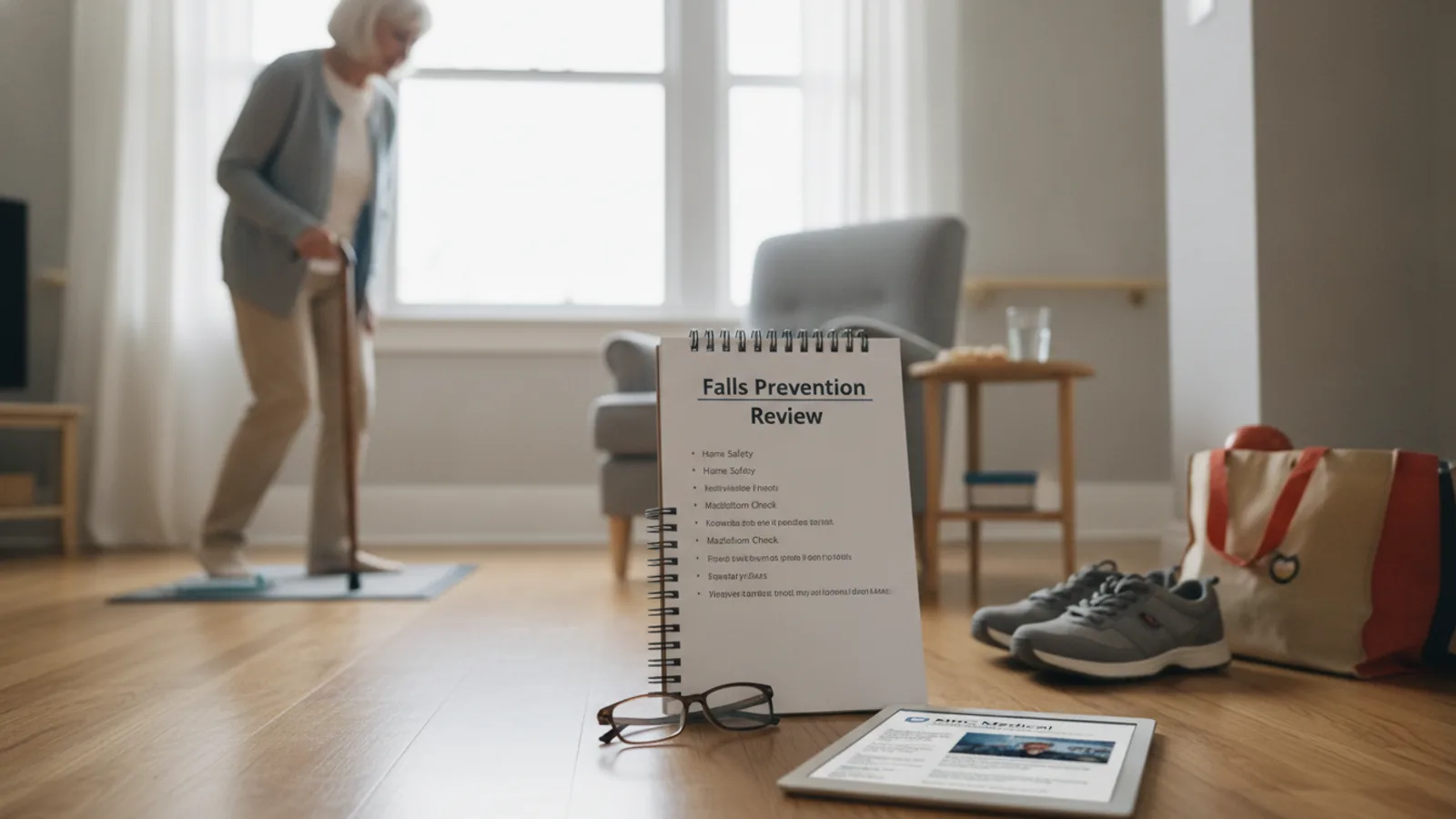
Falls Prevention Checklist For Older Adults Review 2026: Is It Worth It?
A comprehensive, evidence-based tool for systematically identifying and mitigating common fall risks within the home environment, empowering older adults and their families.
Its effectiveness is directly proportional to the user's commitment to implementing the recommended changes and consulting healthcare professionals where advised.
Quick Summary for Skimmers
This review evaluates the utility of a structured falls prevention checklist as a key health management tool for older adults in the UK. We find it to be an invaluable, low-cost instrument for raising awareness and guiding practical safety modifications. While not a substitute for clinical assessment, it provides a clear framework for addressing environmental, personal, and medical risk factors. For individuals and families wishing to take a proactive role in maintaining independence and safety at home, a well-designed checklist is an essential starting point.
Pros
- Provides comprehensive risk coverage
- Based on established clinical evidence
- Empowers proactive home safety management
- Facilitates informed conversations with GPs
Cons
- Requires consistent user effort
- Can seem overwhelming initially
- Not a replacement for professional advice
Falls Prevention Checklist For Older Adults Review: Short Introduction
Falls are a significant public health issue for older adults in the United Kingdom. According to NHS data, around one in three adults over 65 who live at home will have at least one fall a year, with about half of these having more frequent falls. These events are not merely accidents; they can lead to serious injury, loss of confidence, and a decline in independence. Fortunately, many falls are preventable. A key strategy in risk mitigation is the systematic identification and correction of hazards.
This is the role of a falls prevention checklist. It is not a physical product but an informational tool—a structured guide designed to help older adults, families, and carers methodically assess a home and lifestyle for common fall risks. A high-quality checklist translates complex clinical guidelines into a series of straightforward questions and actionable steps. It acts as a prompt for both immediate changes and important conversations with healthcare providers.
In this 2026 review, we evaluate the overall concept and utility of using a falls prevention checklist. We assess its value based on criteria such as the quality of its evidence base, its comprehensiveness, clarity, and the practicality of its recommendations. This article aims to help you understand if incorporating such a checklist into your health management routine is a worthwhile endeavour for maintaining safety and independence.
Comprehensiveness and Evidence Base
The primary measure of any health-related guidance is the quality and breadth of its foundation. A falls prevention checklist is only as good as the evidence it is built upon. A robust checklist should not be an arbitrary list of tips; it must be a distillation of established clinical guidelines from authoritative bodies such as the National Institute for Health and Care Excellence (NICE) and NHS England.
An effective checklist must cover multiple domains of risk in a holistic manner. We assess this based on four key areas:
- Environmental Hazards: This is the most intuitive category. It should include detailed checks for every room in the house, covering lighting (especially on stairs and at night), trip hazards like loose rugs and electrical cords, stair safety (handrails, visibility), and bathroom modifications (grab bars, non-slip mats).
- Personal and Medical Factors: The checklist must prompt consideration of individual health. This includes questions about vision and hearing tests, foot health and appropriate footwear, and symptoms like dizziness or confusion. Crucially, it must include a section on medication review, encouraging a discussion with a GP or pharmacist about potential side effects (like drowsiness) that could increase fall risk.
- Strength and Balance: Acknowledging that physical conditioning is vital, a comprehensive checklist will ask about regular physical activity. It may not prescribe exercises but should signpost towards resources for strength and balance training, such as local community classes or physiotherapy services.
- Behavioural Factors: This includes assessing behaviours like rushing to answer the phone or door, carrying too many items at once, or not using mobility aids as prescribed.
The best checklists, typically those from the NHS or charities like Age UK, are comprehensive and directly reference the evidence base for their recommendations. They provide a structured, multi-faceted approach that reflects the complex nature of fall risk. Lesser-quality versions may focus only on obvious home hazards, omitting the critical personal and medical components, thereby offering a false sense of security.
Comprehensiveness and Evidence Base Score: 94/100
Clarity and Usability
For a tool designed to be used by a wide range of individuals, including older adults who may have visual impairments or varying levels of health literacy, clarity is paramount. The language used must be simple, direct, and free from clinical jargon. A well-designed checklist uses plain English and formats its questions for an unambiguous 'yes' or 'no' response, immediately highlighting areas that require attention.
The structure and layout significantly impact usability. A logical flow, such as organising checks on a room-by-room basis, makes the task less daunting and easier to complete over several sessions if necessary. The use of clear headings, sufficient white space, and a legible font size is critical. For checklists available online, accessibility features such as compatibility with screen readers and options for large print are important considerations.
We find that checklists from major public health bodies generally excel in this area. They are often co-designed with patient groups to ensure the content is not only accurate but also understandable and respectful. Commercial checklists, while sometimes visually appealing, can occasionally complicate matters with unnecessary graphics or by embedding promotional material for specific products, which can detract from the core purpose and compromise trust.
The goal is to empower, not overwhelm. A usable checklist breaks a complex problem down into manageable parts, making the user feel in control and capable of making positive changes. If a checklist is confusing, poorly organised, or difficult to read, it is likely to be abandoned, negating any potential benefit.
Clarity and Usability Score: 85/100
Actionability and Practicality
Identifying a risk is only the first step; the true value of a checklist lies in its ability to guide effective action. An actionable checklist doesn't just point out problems—it suggests clear, practical solutions or directs the user to the right resources for help. This is a critical distinction between a passive list and an active prevention tool.
For instance, instead of just asking "Are your stairs well-lit?", a more actionable checklist would follow up with suggestions like "Consider adding a brighter bulb," "Ensure switches are at both the top and bottom of the stairs," or "Keep a torch by the bed for nighttime trips." This level of detail transforms a vague concern into a concrete to-do list.
Furthermore, the recommendations must be practical. A good checklist will implicitly or explicitly categorise actions. Some are simple, immediate fixes (e.g., moving a trailing wire). Others require more effort or potential expense (e.g., installing a second banister). The best checklists manage these expectations and often provide guidance on where to seek assistance, whether it's from a local handyperson service, an occupational therapist via a GP referral, or a local council for a home safety assessment.
The checklist should also be a facilitator of communication. By prompting a "Medication Review," it gives the user a specific, legitimate reason to book a GP or pharmacist appointment, armed with a clear agenda. This makes the interaction more efficient and productive. A checklist that fails to be actionable leaves the user with a list of anxieties but no clear path forward, which is counterproductive.
Actionability and Practicality Score: 89/100
Packaging and Portability
While not a physical product, the "packaging" and "portability" of a falls prevention checklist relate to its format and accessibility. In 2026, these resources are typically available in several formats, and the suitability of each depends on the user's needs and preferences.
The most common format is a printable PDF document, usually available from websites like the NHS or Age UK. This is highly portable and allows users to physically walk through their home, ticking boxes and making notes. It can be easily shared with family members or taken to a doctor's appointment. The main drawback is the reliance on having a printer and the potential for the document to be misplaced.
Increasingly, interactive digital versions are becoming available. These might be simple web pages or dedicated sections within health apps. The advantage here is convenience, the ability to save progress, and the potential to link directly to other relevant resources or services. However, this format may not be accessible or comfortable for all older adults, some of whom may not use smartphones or computers regularly. A digital-only approach risks excluding a significant portion of the target audience.
The ideal offering includes multiple formats. A high-quality source will provide a downloadable PDF for printing, a web-based version for online completion, and perhaps an option to order a physical copy by post. This multi-format approach ensures the tool is portable and accessible to the widest possible audience, accommodating different levels of technological confidence and ability.
Packaging and Portability Score: 87/100
Value for Money
Reputable falls prevention checklists from public health organisations and major charities in the UK are typically provided free of charge. In this context, "value for money" is not about purchase price but about the return on the investment of time and effort required to use the tool effectively.
The time investment can be considerable. A thorough home assessment using a comprehensive checklist could take one to two hours, plus additional time for implementing changes and arranging appointments. However, when weighed against the potential consequences of a fall, this investment is exceptionally valuable. A single fall can result in hospitalisation, a long recovery period, and significant costs to both the individual and the healthcare system. The cost of a hip fracture to the NHS, for example, is substantial, not to mention the immense personal cost in terms of pain, mobility, and confidence.
Therefore, the value proposition is extremely high. By dedicating a few hours to a structured review and follow-up, an individual can significantly mitigate risks that could lead to life-altering events. While some of the recommended solutions may involve expenditure (e.g., buying new slippers, hiring an electrician to improve lighting), many are free (e.g., decluttering, reviewing medication). The checklist itself, as a guiding tool, provides a framework for prioritising this spending and effort effectively.
The only time value is diminished is when a checklist is used passively. Simply reading it or ticking boxes without taking action yields no benefit. The value is unlocked entirely through engagement and implementation.
Value for Money Score: 95/100
Who Is Falls Prevention Checklist For Older Adults For?
A falls prevention checklist is a versatile tool, but its utility can vary depending on the individual's circumstances and goals. The table below outlines its suitability for different user groups.
| User Group | Suitability & Rationale |
|---|---|
| Older Adults Living Independently | High: This is the primary audience. The checklist is an excellent tool for self-management and empowerment, enabling individuals to take direct control over their home environment and proactively manage their health to maintain independence. |
| Family Members and Carers | High: It provides a structured, non-confrontational way to open a conversation about safety with a loved one. It turns vague worries into a concrete action plan and helps families work collaboratively to make the home safer. |
| Individuals Recently Discharged from Hospital | Very High: Post-hospitalisation is a period of increased fall risk due to deconditioning or new mobility limitations. Using a checklist upon returning home is a critical step in ensuring a safe transition and preventing readmission. |
| Those with Complex Medical Conditions | Moderate: While highly beneficial as a starting point, it must be used in close consultation with healthcare professionals. The checklist can help identify issues to discuss with a GP or specialist, but it cannot replace a formal clinical falls risk assessment. |
| People Seeking a "Quick Fix" | Low: The checklist is a diagnostic and planning tool, not a solution in itself. Its effectiveness is contingent on the user's willingness to invest time and effort in making the necessary changes. It is not for passive consumption. |
How We Reviewed Falls Prevention Checklist For Older Adults
This review is an expert evaluation of the concept and best-practice implementation of a falls prevention checklist as a public health tool. Our assessment is not based on a single proprietary product but on an analysis of the principles and content found in publicly available, evidence-based guidelines from leading UK health organisations.
Our methodology involved a thorough review of resources from NHS England, the National Institute for Health and Care Excellence (NICE) guidelines on falls in older people (CG161), and materials from respected charities such as Age UK and the Royal Osteoporosis Society. We did not conduct a new clinical trial.
Our evaluation criteria—Comprehensiveness, Clarity, Actionability, and Value—were chosen to reflect the key attributes that make such a tool effective in a real-world setting. The scoring reflects how well an ideal, gold-standard checklist performs against these measures. The purpose of this analysis is to provide a clear, non-diagnostic educational framework to help our readers understand what to look for in a reliable checklist and how to use it effectively as part of a broader personal safety strategy.
Final Verdict on falls prevention checklist for older adults
After a comprehensive analysis, we find that a well-constructed, evidence-based falls prevention checklist is an exceptionally valuable and highly recommended tool for older adults and their families in the UK. It is a fundamental component of proactive health management and a powerful instrument for maintaining independence and safety at home.
Its strength lies in its ability to demystify falls prevention, transforming it from a source of anxiety into a series of manageable, actionable steps. By providing a structured framework, it ensures that all key risk areas—from environmental hazards like loose carpets to crucial medical factors like medication side effects—are considered. It empowers users to make immediate practical changes and facilitates more productive, focused conversations with healthcare professionals.
However, it is crucial to recognise that a checklist is not a passive document or a magic bullet. Its utility is entirely dependent on user engagement. To be effective, it must be followed by action, whether that is decluttering a hallway, booking an eye test, or scheduling a medication review with a GP. For those willing to invest a small amount of time and effort, the return—in the form of reduced risk, increased confidence, and prolonged independence—is immeasurable.
Access An NHS-Recommended Checklist