How To Make A Protein Shake | BMC Medical
A practical step-by-step guide to how to make a protein shake, including preparation, instructions, common issues, tips, and next steps.
How To Make A Protein Shake
This guide provides a detailed, step-by-step process for safely preparing a protein shake at home. It is intended for individuals who, after consultation with a healthcare professional, are looking to supplement their dietary protein intake for reasons such as exercise recovery or meeting specific nutritional targets. We will cover the necessary equipment, correct mixing techniques to avoid common issues like clumping, and important safety considerations to ensure the shake aligns with your health and dietary needs. This information is educational and not a substitute for professional medical advice.
Fast Answer
- Preparation: Pour 200-350ml of your chosen liquid into a shaker or blender first.
- Combine: Add one level scoop of protein powder to the liquid.
- Mix: Secure the lid and shake or blend vigorously for 30 seconds until smooth.
- Safety: Always check ingredient labels for allergens and discuss supplement use with your GP.
Before You Start
Proper preparation is key to creating a smooth, palatable, and safe protein shake. Before you begin, it's essential to have the right tools and a clear understanding of your nutritional context. Using supplements without professional guidance can be counterproductive or potentially harmful.
- Appropriate Equipment: You will need either a dedicated shaker bottle with a mixing element (like a wire ball or mesh grid) or an electric blender.
- Quality Ingredients: A protein powder suitable for your dietary needs, a liquid base (e.g., water, milk, or a milk alternative), and any optional additions you plan to use.
- Professional Consultation: Confirmation from your GP or a registered dietitian that protein supplementation is appropriate for your individual health circumstances, especially if you have any pre-existing medical conditions like kidney disease.
- Allergen Check: Carefully read the ingredient label on your protein powder to identify any potential allergens such as whey (from milk), soy, gluten, or nuts.
- Serving Size Knowledge: Locate the serving size and scoop measurement on the protein powder's packaging. Do not estimate this amount.
Step-by-Step Instructions
Following a precise method will help you avoid the common pitfalls of making a protein shake, such as clumps and poor taste. This process ensures a smooth consistency and proper integration of the powder.
Measure and Add Your Liquid Base First
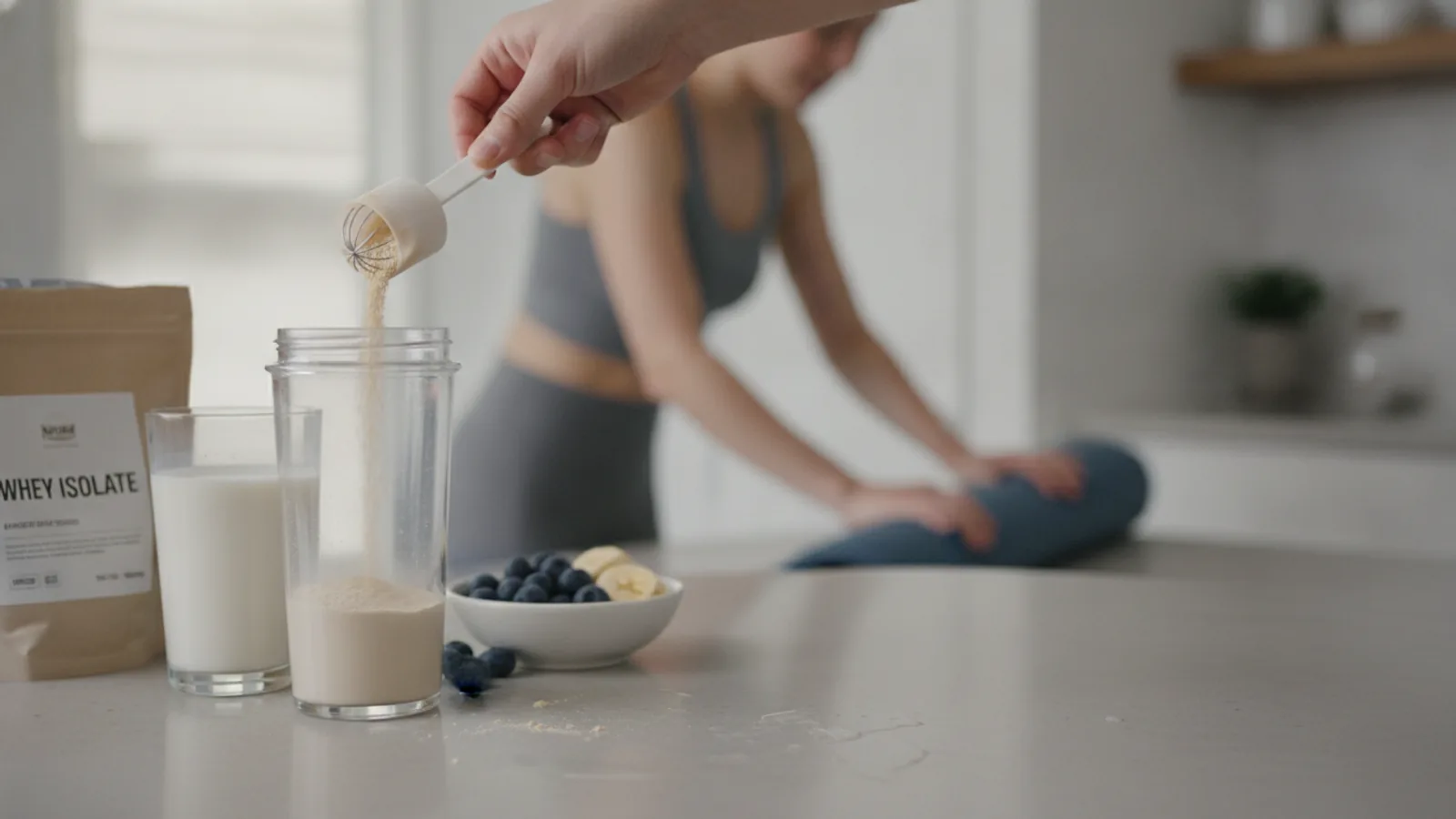
The single most important step for preventing clumps is to add your liquid to the shaker bottle or blender carafe before adding the protein powder. This creates a base for the powder to dissolve into, rather than getting stuck as a dry paste at the bottom of the container.
Measure between 200ml and 350ml of your chosen liquid. The exact amount can be adjusted based on your preference for a thicker or thinner shake. Common liquid choices include:
- Water: The simplest option with zero additional calories, ideal for those closely monitoring their energy intake.
- Dairy Milk: Adds extra protein (around 8 grams per 240ml), calcium, and vitamins. It also creates a creamier, richer texture.
- Plant-Based Milks: Options like almond, soy, oat, or coconut milk are suitable for those with lactose intolerance or following a vegan diet. Be aware of their varying nutritional profiles; for example, soy milk is high in protein, while almond milk is typically lower in calories.
Add the Correct Serving of Protein Powder
Refer to the nutritional information on your protein powder's packaging to find the recommended serving size. This is typically one scoop. Use the provided scoop to measure the powder.
It is crucial to use a level scoop. Do not use a heaping scoop unless the manufacturer's instructions specifically state to do so. A level scoop ensures you are getting the precise amount of protein and other nutrients listed per serving. Tap the scoop gently on the side of the tub to level it off before adding it to your liquid.
Incorporate Optional Nutrient and Flavour Boosters
If you are using a blender, this is the stage to add other ingredients to enhance the shake's nutritional value and taste. A simple shaker bottle is not suitable for blending whole foods.
Consider adding a balanced mix of nutrients:
- Fruits for Carbohydrates and Flavour: Half a banana can add creaminess and potassium. A handful of berries provides fibre and antioxidants.
- Vegetables for Micronutrients: A large handful of fresh spinach is an excellent way to add vitamins and minerals with almost no discernible taste.
- Healthy Fats for Satiety: A tablespoon of almond butter, chia seeds, or ground flaxseed adds healthy fats and fibre, which can help you feel full for longer.
- Fibre Source: A few tablespoons of rolled oats can add complex carbohydrates and fibre, making the shake more substantial.
Secure the Lid and Mix Thoroughly
Proper mixing is essential for a smooth, enjoyable texture. The method differs slightly depending on your equipment.
- For a Shaker Bottle: Ensure the mixing element (ball or mesh) is inside. Screw the lid on tightly and then press the cap down until it clicks firmly into place. A loose lid is a common cause of spills. Shake vigorously in an up-and-down motion for at least 20-30 seconds. You should hear the mixing element moving freely and breaking up any potential clumps.
- For a Blender: Place the lid securely on the carafe. Begin blending on a low speed for about 10 seconds to initially incorporate the powder, then increase the speed to high for another 30-45 seconds. This gradual increase helps prevent the powder from being forced up onto the sides of the carafe before it can be mixed in.
Check Consistency and Consume Promptly
Once you have finished mixing, open the container and check the consistency. If it appears too thick for your liking, you can add a small splash more of your liquid and shake or blend for another 5-10 seconds. If it's too thin, adding a thickening agent like a teaspoon of chia seeds (in a blender) can help, though it's generally easier to thicken a shake than to thin it.
For the best taste, texture, and nutritional benefit, it is recommended to drink your protein shake immediately after preparation. Some ingredients can separate or change texture if left to sit for an extended period.
Quick Reference
| Situation | Use this | Why |
|---|---|---|
| The shake is lumpy or clumpy. | Add liquid before the powder. | This prevents powder from getting trapped and caking at the bottom of the container. |
| The taste is chalky or bland. | Use cold milk instead of water, or blend with a small piece of fruit. | Cold temperature and natural ingredients mask the taste of the powder and improve creaminess. |
| The shake is too thin. | Reduce the amount of liquid, or add a thickening agent like a banana or oats (blender only). | These additions increase the viscosity and substance of the shake for a richer texture. |
| You need a post-workout shake. | Whey protein powder. | Whey is a fast-digesting protein, making it theoretically suitable for rapid muscle repair after exercise. |
| You need a slow-release protein. | Casein protein powder. | Casein digests slowly, providing a sustained release of amino acids, often used before sleep. |
Common Problems When Making a Protein Shake
Even a simple process can have its challenges. Here are solutions to the most frequent issues encountered when preparing protein shakes.
Persistent Clumps
The Problem: Despite your best efforts, you still find dry pockets of powder in your shake.
The Solution: This is almost always an issue of technique or tools. First, re-confirm you are adding liquid first. Second, ensure you are using enough liquid for the amount of powder—check the packaging for a recommended liquid-to-powder ratio. Finally, if using a shaker bottle, make sure it has an effective mixing element. A high-quality shaker with a wire ball is superior to one with only a simple plastic mesh.
Digestive Discomfort
The Problem: You experience bloating, gas, or general stomach upset after drinking your shake.
The Solution: This can be caused by several factors. The most common is lactose intolerance, as many popular whey protein concentrates contain lactose. Trying a whey protein isolate, which has most of the lactose filtered out, or a plant-based protein (like pea or soy) may resolve the issue. Other culprits can be artificial sweeteners or sugar alcohols (like sorbitol or xylitol) used in the flavouring. Drinking the shake too quickly can also overwhelm your digestive system. Sip it slowly over 10-15 minutes. If discomfort persists, cease use and consult your GP.
Excessive Froth or Foam
The Problem: After blending, your shake has a thick layer of foam on top, which can be unpleasant to drink.
The Solution: Froth is created by whipping air into the liquid at high speed. This is more common with whey isolate and high-powered blenders. The easiest solution is to simply let the shake sit on the counter for a minute or two; the foam will naturally dissipate. Blending on a slightly lower speed or for a shorter duration can also help minimise the amount of air incorporated.
Advanced Tips for Making Protein Shakes
Once you have mastered the basics, you can refine your shakes to better suit your specific goals and preferences.
Understanding Protein Timing
While the concept of an "anabolic window" (a 30-60 minute period post-exercise for optimal protein absorption) is popular, much contemporary research suggests that total daily protein intake is the more critical factor for muscle repair and growth. The ideal timing of your protein shake depends on your overall dietary schedule. It can be useful post-workout, as a way to increase the protein content of a low-protein meal, or between meals to manage hunger. For personalised advice, a consultation with a sports nutritionist or registered dietitian is recommended.
Cleaning and Odour Prevention
Protein residue, especially from dairy-based powders, can quickly lead to a persistent sour smell in shaker bottles. Rinsing immediately after use is the best preventative measure. For a deep clean, wash with hot water and dish soap. To eliminate stubborn odours, fill the bottle with a solution of equal parts white vinegar and water, or a teaspoon of baking soda in water, and let it sit overnight before washing thoroughly.
Creating "Blender Packs" for Efficiency
For those who use a blender and are short on time, you can prepare ingredients in advance. Portion out your solid ingredients (fruits, vegetables, oats, seeds) into small freezer bags or containers. When you are ready for your shake, simply empty one "blender pack" into the blender, add your liquid and protein powder, and blend. This streamlines the morning routine considerably.
How To Make A Protein Shake FAQ
Can I make a protein shake without a blender?
Yes, absolutely. A shaker bottle is specifically designed for this purpose and is very effective for mixing protein powder with a liquid. It is portable and easier to clean than a blender. However, it cannot be used to incorporate solid ingredients like fruit or oats.
Should I use water or milk as the liquid base?
This decision should be based on your personal nutritional goals and taste preferences. Water provides hydration without adding calories, fat, or carbohydrates. Milk (both dairy and plant-based) contributes additional nutrients and calories, and results in a significantly creamier, more palatable shake for most people.
Can I prepare my protein shake ahead of time?
It is strongly recommended to consume your shake immediately after preparation for the best texture and taste. If you must prepare it in advance, store it in a tightly sealed container in the refrigerator and plan to drink it within a few hours. Be aware that separation will occur, so you will need to shake it vigorously again before consumption. Some types of protein may become thicker or gelatinous over time.
Is it safe to have a protein shake every day?
For most healthy individuals, consuming a protein shake daily as part of a balanced diet is generally considered safe. However, it is critical to remember that they are supplements, designed to "supplement" a diet of whole foods, not replace it. Protein from sources like lean meats, fish, eggs, and legumes should still form the foundation of your intake. It is essential to ensure your total protein consumption does not excessively exceed your daily requirements. Always discuss daily, long-term supplement use with your GP or a registered dietitian.
Final Checklist for Making a Protein Shake
Use this checklist before and during your preparation to ensure a safe and effective result every time.
- Have you consulted with a healthcare professional to confirm that protein supplementation is right for you?
- Have you thoroughly read the protein powder's ingredient list to check for any personal allergens?
- Did you add your liquid (water, milk, etc.) to the shaker or blender first?
- Did you use a level scoop to measure the powder, as directed on the packaging?
- Is the lid of your shaker bottle or blender fastened securely to prevent leaks?
- Did you shake or blend for at least 30 seconds to ensure a smooth consistency?
- Are you prepared to rinse your equipment immediately after use to maintain hygiene and prevent odours?