How To Use A Pulse Oximeter For Accurate Readings | BMC Medical
A practical step-by-step guide to How to use a pulse oximeter for accurate readings, including preparation, instructions, common issues, tips, and next steps.

How To Use A Pulse Oximeter For Accurate Readings
Pulse oximeters estimate the oxygen level in your blood by shining light through your fingertip. This guide explains how to prepare, position the device, and interpret readings so you can track your oxygen saturation reliably at home and know when to seek medical advice.
Fast Answer
- Warm your hands, remove nail polish, and rest for five minutes before placing the sensor on a bare fingertip.
- Hold still and wait for the number to stabilize before writing down the reading and the time.
Before You Start
- Remove any nail polish or artificial nails from the finger you plan to use, because colored coatings can block the light sensor.
- Warm your hands by rubbing them together or soaking them in warm water for a minute, since cold fingers reduce blood flow and can lower the reading.
- Wait at least five minutes after smoking, exercising, or drinking caffeine, because these can temporarily change your circulation and heart rate.
- Sit quietly for a few minutes with your feet flat and your back supported, so your body is at rest when you take the measurement.
Step-by-Step Instructions
Choose and prepare your finger
Select a finger that is clean, dry, and free of cuts or sores. Remove any jewelry, such as rings, that could pinch the skin or block the sensor. If you have long nails or nail polish, use a different finger or remove the polish first. Warm the hand by rubbing your palms together for about thirty seconds, or run warm water over your fingers and dry them thoroughly. Cold fingers narrow the blood vessels and can make the reading seem lower than it really is. A practical check is to look at your fingertip: it should be pink and feel comfortably warm, not pale or cold. This matters because the device measures light passing through blood, so good circulation gives a clearer signal. Once the finger is ready, turn on the oximeter and clip it gently onto the fingertip, making sure the small lights line up with the nail bed.
Position the sensor correctly
Slide your finger into the clip until the tip touches the end, but do not force it. The sensor has two parts: one side shines light through your finger, and the other side detects it. For most devices, the side with the light source should face your fingernail, and the detector should sit on the pad of your finger. Check that the clip is snug but not tight enough to leave a mark or reduce blood flow. If the device has a screen, make sure it is facing you so you can see the numbers easily. A practical check is to wiggle your finger slightly; if the clip feels loose or the reading jumps around, adjust the position or switch to a different finger. Correct alignment keeps the light path stable, which helps the oximeter calculate a steady percentage. Once it is in place, rest your hand on a table or armrest so the finger stays still during the measurement.
Stay still and wait for a steady reading
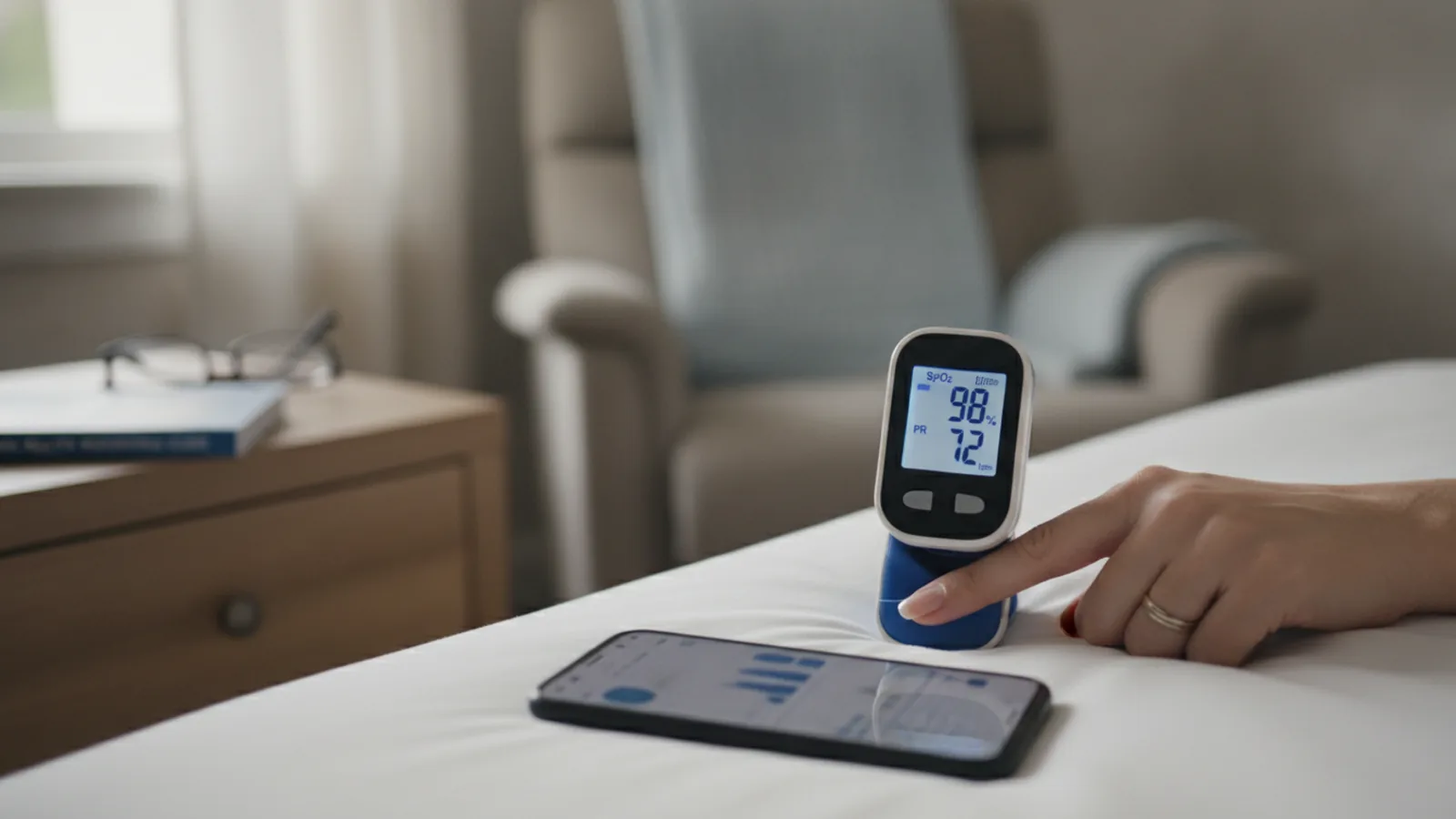
After the oximeter is on your finger, keep your hand still and breathe normally. Movement, shivering, or talking can disturb the light signal and cause the number to jump. Watch the display for a few seconds; most devices show a pulse wave or a blinking icon while they are calculating. Wait until the oxygen saturation number and the pulse rate stay the same for at least five to ten seconds. A practical check is to look for a consistent pulse reading that matches the rhythm you feel in your chest or wrist. If the numbers keep changing, relax your hand, warm it again if needed, and wait another half minute. This matters because a stable reading is more trustworthy than a single number that flashes briefly. Do not press the clip harder or squeeze your finger, as that can reduce blood flow and lower the result. When the reading is steady, you are ready to record it.
Record the reading and note the time
Once the numbers are stable, write down the oxygen saturation percentage and your pulse rate. Also note the date and time, because readings can change during the day or with activity. Use a notebook, a note on your phone, or a simple log sheet. If you are tracking a health condition, your doctor may ask for a series of readings rather than just one. A practical check is to compare the current reading with your usual baseline, which is the number you typically see when you feel well. This matters because a single low number might be a temporary blip, while a pattern of low numbers is more meaningful. After recording, remove the oximeter gently and turn it off to save the battery. Clean the finger pads and the inside of the clip with a soft, slightly damp cloth if you plan to share the device, and let it dry completely before the next use. Keep your log in one place so you can review trends.
Repeat the measurement on another finger if needed
If the first reading seems off—too low, too high, or very different from how you feel—wait a minute and try again on a different finger. Sometimes a finger has poor circulation, a small bruise, or a temporary pinch from the clip. Switch to the same finger on the opposite hand or choose a different finger on the same hand. Follow the same preparation: warm the hand, check for polish, and position the sensor correctly. A practical check is to see whether the new reading is close to the first one. If two fingers give similar numbers, the result is more likely to be accurate. If they differ by several points, clean the sensor, warm your hands again, and take a third reading. This matters because comparing fingers helps you rule out a local problem with one finger. Record all the readings and note which finger you used, so you and your doctor can see the pattern clearly.
Know when to seek medical advice
A pulse oximeter is a helpful tool, but it cannot replace a medical evaluation. Learn the warning signs that mean you should contact a healthcare professional right away. These include a reading that is much lower than your usual baseline, a reading that stays low even after you warm your hands and rest, or symptoms such as shortness of breath, chest pain, confusion, dizziness, or bluish lips or fingertips. If you have a chronic lung or heart condition, ask your doctor what number should prompt a call. A practical check is to keep a written list of your personal warning signs and the phone number of your clinic or emergency services. This matters because acting early can prevent a small problem from becoming serious. Do not try to raise your oxygen level by breathing quickly or deeply unless a medical professional has told you to do so. When in doubt, call for advice rather than waiting.
Quick Reference
| Situation | Action | Why it helps |
|---|---|---|
| Your hands are cold and the oximeter shows a low number. | Rub your hands together for thirty seconds or soak them in warm water, dry them well, and take the reading again on the same finger. | Cold temperatures narrow blood vessels in the fingers, which can reduce the light signal and make the oxygen level appear lower than it truly is. |
| The reading keeps jumping up and down on the screen. | Rest your hand on a firm surface, keep your fingers still, and wait until the number and pulse rate stay steady for at least ten seconds before writing anything down. | Movement creates noise in the light signal, so a steady reading is more reliable than a number that changes every second. |
| You get a much lower number than usual but you feel fine. | Check that your finger is warm and polish-free, move the clip to a different finger, and take a second reading. If it is still low, contact your healthcare provider. | A single low reading can come from poor placement or cold fingers, but a repeated low result may need medical advice even if you feel well. |
Common Issues
- Nail polish or artificial nails block the sensor.: Remove polish from at least one finger or choose a finger without any coating. If you cannot remove it, try a toe or an earlobe if your device is designed for those sites, and follow the device instructions.
- The oximeter will not turn on or the screen stays blank.: Check that the batteries are inserted correctly and have power. If your device uses a rechargeable battery, connect it to the charger for a while. If it still does not turn on, try fresh batteries or a different power source, and consult the device manual.
- Your reading is normal but you still feel short of breath or unwell.: Trust your symptoms over the number. Stop relying on the oximeter and contact a healthcare professional or emergency services, because oxygen level is only one measure of how well you are breathing.
Advanced Tips
- Take readings at the same times each day, such as morning and evening, so you can compare like with like and spot meaningful changes.
- If your device shows a perfusion index or signal strength, record it alongside the oxygen level; a weak signal can make the reading less reliable.
- Keep a small note of your altitude if you live or travel high above sea level, because normal oxygen levels are often lower there and your doctor can interpret your numbers in context.
Final Checklist
- Warm your hands, remove nail polish, and make sure the finger is clean and dry before clipping on the oximeter.
- Sit still, breathe normally, and wait until the oxygen level and pulse rate stay steady for several seconds.
- Write down the reading, your pulse, the time, and which finger you used, so you can track changes over days.
- Know your personal warning signs and the contact information for your clinic or emergency services before you need them.
FAQ
What is a normal pulse oximeter reading?
For most healthy people at sea level, a normal reading is typically between 95 and 100 percent. However, your normal may be different if you have a chronic condition or live at a high altitude. Ask your healthcare provider what range is right for you, and pay attention to changes from your own baseline rather than a single number.
Can I use a pulse oximeter on a cold finger?
It is better to warm your hands first. Cold fingers reduce blood flow, which can weaken the signal and make the oxygen level look lower than it is. Rub your hands together, run them under warm water, or hold a warm mug until your fingertips feel comfortably warm, then dry them and take the reading again.
How often should I check my oxygen level at home?
Follow the advice of your healthcare provider. Some people check once a day, while others check more often during an illness or after activity. If you are monitoring a condition, ask your provider for a specific schedule. Record each reading with the time so you can show trends, and seek advice if you have symptoms or a reading that concerns you.