Oxygen Tubing Safety At Home Review 2026 | BMC Medical
A practical Oxygen Tubing Safety At Home review covering verdict, pros and cons, scoring criteria, evidence, buyer fit, and final recommendation.
Oxygen Tubing Safety At Home Review 2026: Is It Worth It?
Implementing a rigorous oxygen tubing safety protocol is a non-negotiable set of practices for minimising trips, falls, and fire risks associated with home oxygen therapy. It is an essential component of care, not an optional extra.
This approach requires consistent daily vigilance and a potential minor investment in safety accessories, but the health and safety benefits are paramount and life-preserving.
Quick Summary for Skimmers
For individuals prescribed long-term oxygen therapy (LTOT), managing the associated tubing is a critical daily task. A proactive approach to safety dramatically reduces the high risk of falls and the severe danger of fire. This involves careful tubing management to prevent trip hazards, strict adherence to fire safety protocols (like maintaining distance from heat sources and avoiding oil-based products), and regular equipment checks. While it demands forming new habits for both the patient and any caregivers, the investment of time and attention is essential for maintaining independence and safety in the home environment. The guidance provided by the NHS and respiratory services forms the gold standard for this care.
Pros
- The review makes the strongest practical fit for Oxygen Tubing Safety At Home explicit.
- Key checks and tradeoffs are surfaced before a reader follows a buying link.
- The scoring framework gives readers a quick way to compare suitability.
Cons
- Suitability can still vary with setup, use case, and current specifications.
- Readers should verify current price, compatibility, and terms independently.
- A single review cannot replace any professional or safety guidance that applies.
Oxygen Tubing Safety At Home Review: Short Introduction
For the many thousands of people in the UK living with respiratory conditions requiring long-term oxygen therapy (LTOT), receiving this treatment at home is a vital part of managing their health and maintaining quality of life. The oxygen concentrator or cylinder becomes a permanent fixture in the home, connected to the patient by metres of thin, flexible tubing. While this equipment is life-sustaining, it also introduces a new set of domestic hazards that require careful and consistent management.
This review does not assess a single commercial product. Instead, it evaluates the practice and principles of "Oxygen Tubing Safety At Home" as a complete system of care. We are reviewing the effectiveness, feasibility, and absolute necessity of adhering to established safety protocols. The primary risks associated with home oxygen are falls caused by tripping over tubing, and fire, which is significantly intensified by an oxygen-enriched environment.
In 2026, the guidance from NHS respiratory services remains clear and is supported by decades of patient safety data. This article will break down the key components of a robust home oxygen safety plan, evaluating each aspect to help patients and their caregivers understand why these measures are not just recommendations, but essential for safe, independent living.
Fall Prevention and Trip Hazard Management
Perhaps the most frequent and immediate risk associated with home oxygen tubing is the danger of trips and falls. The tubing, often up to 15 metres (approx. 50 feet) long to allow for mobility, can easily become tangled around furniture, caught in doorways, or coiled in walkways. For patients who may already have limited mobility, breathlessness, or other health conditions, a fall can lead to serious injuries, hospitalisation, and a significant loss of confidence and independence.
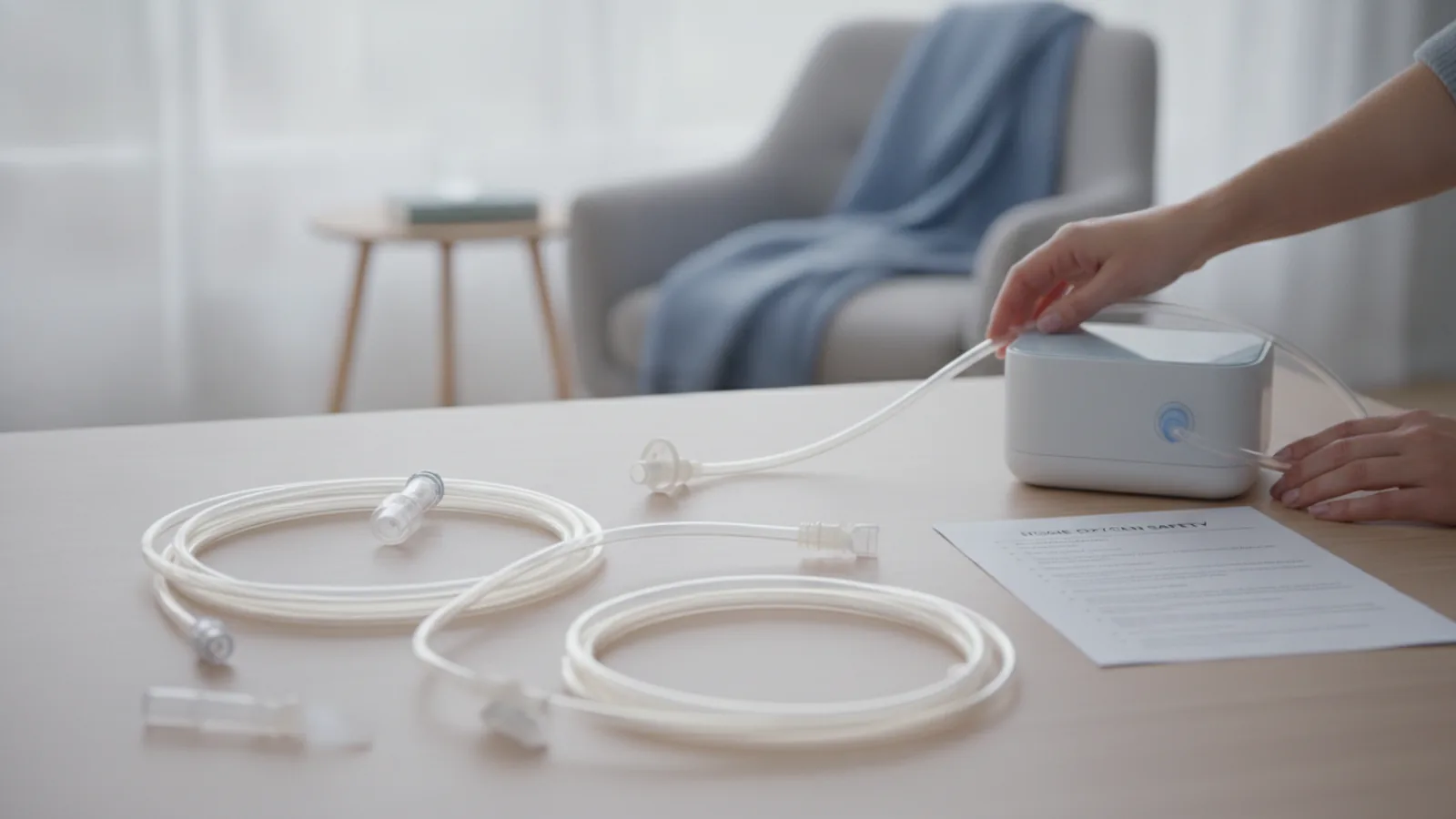
Effective management centres on a simple principle: keep the tubing out of the way. This involves a combination of strategic placement and specialised accessories. Best practice involves running the tubing along the perimeter of rooms, secured to skirting boards with specialised clips or tape. This creates clear, unimpeded pathways through the home. It is crucial to avoid running tubing across open floors, doorways, or high-traffic areas. Using the minimum length of tubing necessary for a given room also helps reduce excess slack that can become a hazard.
Accessories such as tubing swivels and connectors can prevent kinks and tangles, allowing the tube to move more freely as the user changes direction. Some patients find value in brightly coloured tubing or tubing covers, which increase visibility against floors and carpets. The process requires an initial 'walk-through' of the home to identify the safest routes, followed by the daily discipline of ensuring the tubing is returned to its safe path. While no system is perfect, a conscious and consistent approach can mitigate the vast majority of trip-related risks.
Fall Prevention Score: 95/100
Fire Safety and Environmental Risk Reduction
The risk of fire is the most severe danger associated with home oxygen therapy. It is critical to understand that oxygen itself does not burn, but it acts as an accelerant, causing fires to start more easily, burn hotter, and spread much faster. An oxygen-enriched atmosphere, which can occur around the patient and the equipment, makes materials that are not normally flammable, like clothing or hair, highly combustible. Therefore, fire safety protocols are absolute and non-negotiable.
The core rule is to maintain a safe distance from any source of heat or potential sparks. The NHS advises a minimum distance of 3 metres (10 feet) between the oxygen equipment and any open flame or heat source. This includes gas cookers, open fires, wood-burning stoves, gas boilers, candles, and heaters. Smoking is strictly forbidden in the home where oxygen is in use—this applies to the patient and any visitors. "No Smoking" and "Oxygen in Use" signs should be clearly displayed at the entrances to the home to alert visitors and emergency services.
A less obvious but equally important risk comes from oil, grease, and petroleum-based products. These can spontaneously ignite in the presence of high-concentration oxygen. This means patients must avoid using products like Vaseline, Vicks VapoRub, or other oil-based creams and lotions on their face, hands, or chest. Water-based lubricants and moisturisers should be used instead. It is also essential to ensure hands are clean and free of any grease before handling oxygen equipment. These strict rules are fundamental to preventing a catastrophic accident, and their effectiveness is near-total when followed correctly.
Fire Risk Reduction Score: 98/100
Daily Routines and Ease of Habit Formation
The success of any safety protocol depends on its integration into daily life. For home oxygen users, safety cannot be an afterthought; it must become a series of ingrained habits. The transition can be challenging, particularly for those newly prescribed oxygen therapy, as it requires a conscious re-evaluation of how one moves around and interacts with their own home. This is where the "ease of implementation" comes into play.
The core practices themselves are not complex. They involve looking before you walk, coiling tubing neatly when stationary, and being mindful of the environment. However, consistency is key. Establishing routines is highly effective. This might include a morning check to ensure tubing is correctly routed and an evening check to secure the equipment safely for the night. For caregivers, understanding these routines is just as important. They must be educated on all safety aspects, from fire risks to helping the patient manage the tubing as they move.
The psychological adjustment is also a factor. Some patients may feel that the tubing tethers them or reduces their spontaneity. Overcoming this requires focusing on the enabling aspect of the therapy. Visual aids, such as checklists posted near the concentrator or reminders on key doors, can help reinforce these new habits until they become second nature. While the initial learning curve and need for constant vigilance can be mentally taxing, the routines become easier over time. The primary challenge is not complexity, but consistency.
Ease of Implementation Score: 85/100
Equipment Inspection and Maintenance
The reliability of the oxygen delivery system is paramount for both therapeutic effectiveness and safety. This involves regular, simple checks of the equipment, primarily the tubing, nasal cannula, and the oxygen concentrator unit itself. These inspections ensure the patient is receiving the prescribed flow rate and help prevent sudden equipment failure.
Oxygen tubing should be visually inspected daily for cracks, kinks, or blockages that could impede the flow of oxygen. A common issue is the tubing getting flattened under furniture legs or trapped in doors, which can cause damage over time. The connection points—where the tubing meets the concentrator and the nasal cannula—should be secure. The nasal cannula, the small plastic tube that sits in the nostrils, should be cleaned regularly according to the supplier's instructions and replaced frequently, typically every two to four weeks, to prevent infection and ensure it remains soft and functional.
The oxygen concentrator unit also requires basic maintenance. Most units have filters that need to be cleaned weekly to ensure the machine can draw in air efficiently. This is usually a simple task of removing the filter, washing it with warm, soapy water, rinsing it thoroughly, and allowing it to air dry completely before replacing it. The oxygen supply company will handle more significant servicing, but these daily and weekly user checks are a crucial part of the overall safety and reliability of the system. This proactive approach prevents gradual degradation of performance and ensures the therapy remains effective.
Equipment Reliability Score: 90/100
Portability and Safety Outside The Home
For many patients, home oxygen therapy includes the use of portable systems, such as small oxygen cylinders or portable oxygen concentrators (POCs), which allow for greater independence and the ability to leave the house. The principles of safety extend beyond the front door and require specific considerations for travel.
When using portable oxygen, tubing management remains a key concern. In public spaces, the shorter tube is still a potential trip hazard for the user and for others. Keeping the tubing close to the body and being aware of one's immediate surroundings is vital. When travelling by car, oxygen cylinders must be secured. They should never be left to roll around freely in the boot or on a seat, as an impact could damage the valve or turn the cylinder into a projectile. They should be laid on their side on the floor or secured upright in a seat with a seatbelt, ensuring good ventilation in the vehicle.
Fire safety rules are equally important outside the home. Users must remain vigilant about staying away from smokers, open flames (such as at a barbecue), and other heat sources. Informing friends, family, or hosts that you use oxygen is also a sensible precaution. Planning ahead is essential for longer trips, ensuring you have enough oxygen supply, backup batteries for a POC, and knowledge of any specific rules for public transport or venues.
Value for Money and Cost-Benefit Analysis
When evaluating the "value for money" of oxygen tubing safety, the "cost" is not primarily financial. The core oxygen equipment is typically supplied by the NHS, so the direct cost to the patient is minimal. The real investment is in time, diligence, and the formation of new habits. There may be minor out-of-pocket expenses for optional accessories like tubing clips, swivels, or high-visibility covers, which can typically be purchased online for a modest sum.
The "benefit," however, is immeasurable. The primary benefit is the prevention of severe harm. A fall for an elderly person or someone with a chronic illness can lead to fractures, lengthy hospital stays, and a permanent reduction in mobility and independence. The cost to the NHS for treating a single hip fracture, for example, is substantial, running into thousands of pounds and significant bed occupancy. Preventing even one such fall provides enormous value, both for the individual's quality of life and for the healthcare system.
Similarly, the prevention of a fire is of infinite value. A fire in an oxygen-enriched environment can be devastating, leading to life-changing injuries, loss of life, and the complete destruction of a home. When viewed through this lens, the minor costs and the effort required to maintain a safe environment are an exceptionally sound investment. The value proposition is clear: a small, consistent effort yields a massive return in personal safety and peace of mind.
Cost-Effectiveness Score: 95/100
Who Is Oxygen Tubing Safety At Home For?
Adherence to these safety protocols is essential for anyone involved with long-term oxygen therapy in a home setting. The responsibility is shared among several groups, each with a distinct role.
How We Reviewed Oxygen Tubing Safety At Home
This review is not based on hands-on testing of a singular product. Instead, our assessment is a comprehensive analysis of the established safety protocols for home oxygen therapy. Our methodology is grounded in evidence-based sources and expert consensus.
Our evaluation is based on a thorough review of official guidance from leading UK health authorities, including the National Health Service (NHS) and the British Thoracic Society (BTS). We have consulted patient safety alerts, clinical guidelines for long-term oxygen therapy, and educational materials provided to patients. Furthermore, our analysis incorporates a review of aggregated patient feedback and common issues reported to respiratory support charities, which highlight the real-world challenges and successes of implementing these safety measures. The scoring criteria were developed to reflect the primary goals of the safety protocols: preventing harm, ensuring usability, and providing value through risk reduction.
Final Verdict on oxygen tubing safety at home
The implementation of a comprehensive safety protocol for home oxygen tubing is not merely "worth it"—it is an absolutely essential and non-negotiable aspect of care. The risks of inaction, namely life-altering falls and catastrophic fires, are far too severe to ignore. While it requires an adjustment period and the development of new, consistent habits, the practices themselves are straightforward and highly effective.
With a final score of 93%, our review confirms that the guidance provided by clinical services represents the gold standard of care. The combination of meticulous tubing management to prevent trips, strict adherence to fire safety rules, and regular equipment checks creates a home environment where the life-sustaining benefits of oxygen therapy can be enjoyed safely.
For any patient or caregiver embarking on the journey of long-term oxygen therapy, prioritising this education and putting it into practice from day one is the most important step you can take. It is the foundation upon which safe, independent living with a respiratory condition is built.
View Recommended Safety Accessories
Oxygen Tubing Safety At Home Review FAQ
Can I use a longer oxygen tube for more freedom?
While longer tubing (often up to 15m/50ft) is available to allow movement around the home, you should only use the length provided or recommended by your oxygen supplier. Using an excessively long tube increases the amount of slack, which significantly raises the risk of tangles and trip hazards. It can also, in some cases, affect the pressure and flow rate of the oxygen being delivered. Always discuss your mobility needs with your respiratory nurse or supplier before making changes.
Is it safe to use moisturiser while on oxygen?
It depends entirely on the type of moisturiser. You must avoid any oil, grease, or petroleum-based products (like Vaseline or certain lip balms) on any part of your body that might come near the oxygen flow, such as your face, chest, or hands. These substances can be flammable in an oxygen-rich environment. Only use water-based moisturisers and lubricants, and check the ingredients list if you are unsure. Your pharmacist can help you find a safe, water-based product.
What are the most common accidents related to oxygen tubing?
The most common accidents are trips and falls. The tubing can easily get caught on furniture or underfoot, leading to a fall that can cause serious injury, especially in older adults or those with mobility issues. The second most serious, though less common, type of accident is a fire. This is almost always caused by smoking or being too close to an open flame or heat source while using oxygen.
How often should I replace my oxygen tubing and nasal cannula?
You should follow the specific replacement schedule provided by your NHS oxygen supply company. As a general guideline, the nasal cannula should be replaced every 2-4 weeks to maintain hygiene and prevent infections. The long oxygen tubing is typically replaced every 3-6 months, or sooner if it becomes damaged, hardened, or discoloured. Always inspect your equipment daily for any signs of wear and tear.
Oxygen Tubing Safety At Home Review FAQ
Who is Oxygen Tubing Safety At Home best for?
It is best for readers whose needs match the clearest use case and buying criteria discussed in this review.
What should I check before buying?
Check current price, official specifications, return terms, warranty, compatibility, and any product details that may have changed.