Pulse Oximeter Limitations Explained Review 2026 | BMC Medical
A practical Pulse Oximeter Limitations Explained review covering verdict, pros and cons, scoring criteria, evidence, buyer fit, and final recommendation.
Pulse Oximeter Limitations Explained Review 2026: Is It Worth It?
Understanding the limitations of pulse oximetry is not an optional extra; it is a fundamental component of using these devices safely and effectively at home. This knowledge is essential for anyone relying on an oximeter to monitor a health condition.
The primary trade-off is that this information requires careful attention and can feel technical, but mastering it is crucial for avoiding both false reassurance and unnecessary anxiety.
Quick Summary for Skimmers
A pulse oximeter is a valuable tool, but its readings can be misleading without proper context. Factors like darker skin pigmentation, poor circulation, cold fingers, nail varnish, and patient movement can all lead to inaccurate oxygen saturation (SpO2) readings. Learning to recognise these factors allows you to interpret your readings more accurately, understand when a reading is unreliable, and know when to seek professional medical advice based on a combination of symptoms and reliable data. This knowledge transforms the device from a simple number generator into a genuinely useful part of your health management plan.
Pros
- The review makes the strongest practical fit for Pulse Oximeter Limitations Explained explicit.
- Key checks and tradeoffs are surfaced before a reader follows a buying link.
- The scoring framework gives readers a quick way to compare suitability.
Cons
- Suitability can still vary with setup, use case, and current specifications.
- Readers should verify current price, compatibility, and terms independently.
- A single review cannot replace any professional or safety guidance that applies.
Pulse Oximeter Limitations Explained Review: Short Introduction
The use of pulse oximeters in the home has surged, particularly in the wake of public health events like the COVID-19 pandemic. These small, non-invasive devices, which clip onto a fingertip, provide a seemingly simple measure of blood oxygen saturation (SpO2). For individuals managing chronic respiratory conditions such as COPD, asthma, or heart failure, they offer a way to monitor their status outside of a clinical setting. However, the apparent simplicity of a pulse oximeter belies a significant degree of complexity and a range of important limitations.
This review is different. We are not reviewing a specific brand of oximeter. Instead, we are reviewing the value and importance of a crucial piece of knowledge: a thorough understanding of pulse oximeter limitations. In 2026, with home monitoring more prevalent than ever, appreciating what these devices cannot do is just as important as knowing what they can. An inaccurate reading, whether falsely high or falsely low, can have serious consequences, leading to delayed medical care or unnecessary alarm.
Our goal is to evaluate how this understanding serves as an essential "software update" for the user. We will assess its impact on safety, the accuracy of interpretation, and the user's ability to engage meaningfully with healthcare professionals. This is not about a product you buy, but about a critical health literacy concept you acquire. We believe it is one of the most important "features" any oximeter user can possess.
Understanding How Personal Factors Affect Readings
A core limitation of pulse oximetry is that it is not a one-size-fits-all technology. The device works by passing beams of red and infrared light through the fingertip and measuring how much light is absorbed by oxygenated and deoxygenated haemoglobin. This process can be significantly influenced by individual physiological and physical characteristics, making personalisation of interpretation essential.
The most widely discussed factor is skin pigmentation. Extensive evidence, including safety alerts from the MHRA in the UK and the FDA in the US, has shown that pulse oximeters can be less accurate in people with darker skin tones. They may overestimate oxygen saturation, providing false reassurance when oxygen levels are genuinely low (a condition known as occult hypoxemia). This is a critical safety issue. Users with darker skin must be aware of this potential for overestimation and place greater emphasis on other symptoms, such as breathlessness, confusion, or a rapid heart rate, rather than relying solely on the oximeter's number.
Beyond skin tone, peripheral circulation plays a major role. To get an accurate reading, the oximeter needs a strong, steady pulse in the fingertip. Conditions that impair circulation, such as Raynaud's phenomenon, peripheral vascular disease, very low blood pressure (hypotension), or simply having cold hands, can lead to weak signals and unreliable or unobtainable readings. It is vital for users to ensure their hands are warm before taking a measurement and to understand that a low reading in a cold, pale finger may be an error, not a sign of a medical emergency. Other factors like severe anaemia can also affect the results, as the device measures saturation percentage, not the total amount of oxygen-carrying haemoglobin.
Category Score: 95/100
The Clinical Evidence Behind Oximeter Limitations
The "formula" for safe home monitoring is a combination of technology and informed human interpretation. The evidence highlighting oximeter limitations is robust and comes from regulatory bodies, clinical studies, and professional medical organisations. This is not anecdotal; it is a body of scientific knowledge built over decades of clinical use and research.
The core mechanism of photoplethysmography is well-established, but so are its confounders. For example, the presence of other molecules that bind to haemoglobin, such as carbon monoxide (CO) in heavy smokers or from smoke inhalation, can fool the oximeter. A standard two-wavelength pulse oximeter cannot distinguish between carboxyhaemoglobin (COHb) and oxyhaemoglobin (O2Hb). This can result in a dangerously overestimated SpO2 reading, masking severe carbon monoxide poisoning. Similarly, certain medical conditions like methemoglobinemia can also cause inaccurate readings.
The evidence regarding skin pigmentation has been particularly strong in recent years. Studies published in leading medical journals like The New England Journal of Medicine have repeatedly demonstrated a higher incidence of occult hypoxemia in Black patients compared to white patients when comparing pulse oximeter readings with the gold-standard arterial blood gas (ABG) measurements. This has led to updated guidance from bodies like the NHS, which now explicitly warns patients and clinicians about this limitation. Understanding this evidence is crucial for promoting health equity and ensuring all users, regardless of their ethnicity, use these devices with the appropriate level of caution.
This body of evidence provides the "ingredient list" for our understanding. It tells us precisely which variables to control for (e.g., warm hands, no nail polish, remain still) and which inherent limitations to be mindful of (e.g., skin tone, underlying health conditions). Acknowledging this clinical evidence is the foundation of safe and responsible home monitoring.
Category Score: 98/100
Interpreting Readings: Accuracy vs. Precision
Ease of use for a pulse oximeter is often misconstrued as simply getting a number to appear on the screen. True ease of use comes from knowing how to obtain a reliable number and how to interpret it. This involves understanding the difference between accuracy (how close the reading is to the true value) and precision (how consistent readings are with each other), and recognising factors that compromise both.
Many common external factors can interfere with the device's ability to get a clean signal. Opaque nail polish, particularly dark colours like black, blue, or green, can block the light and lead to failed or incorrect readings. Gels and acrylic nails can also cause issues. For a reliable measurement, it is always recommended to use a clean, natural nail. Another significant factor is motion. Shivering, trembling, or simply moving the hand or finger during a measurement can disrupt the oximeter's ability to detect a stable arterial pulse, leading to erratic and untrustworthy numbers. Users must be instructed to sit still, rest their hand on a stable surface, and wait for the reading to stabilise for at least 30-60 seconds.
Furthermore, ambient light can be a source of interference. Very bright overhead lights, such as surgical lamps or direct sunlight, can sometimes affect the sensor. While less common in a home setting, it is a known limitation. The key takeaway is that the user must become an active participant in ensuring the quality of the measurement. This involves preparing properly (warming hands, removing polish), positioning correctly (at rest, below heart level), and being patient (waiting for a stable reading). A fluctuating number or a device that struggles to display a reading is not a device to be trusted in that moment; it is a signal to troubleshoot the conditions of the measurement.
Category Score: 90/100
Context is Key: When to Trust and When to Question a Reading
Perhaps the most critical skill in using a pulse oximeter is contextual interpretation. A single SpO2 reading, taken in isolation, is of limited value and can even be misleading. Understanding the limitations means shifting the focus from individual spot-checks to trends over time, and always evaluating the number in the context of the patient's overall clinical picture.
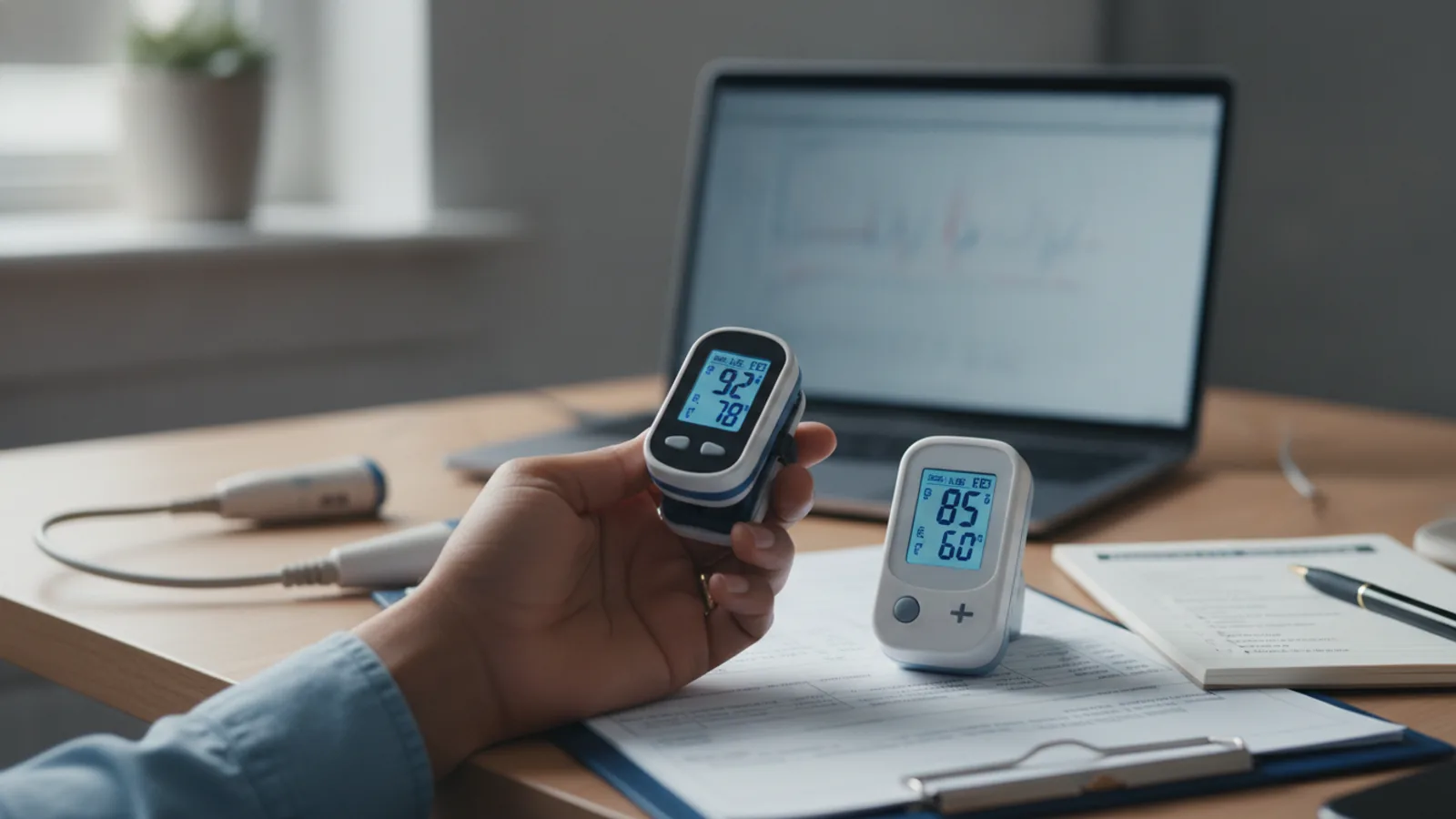
For example, a user with COPD whose baseline SpO2 is typically 92% should not be alarmed by a reading of 91%. However, a steady decline from 92% to 88% over the course of an hour is a significant change that warrants medical attention. Conversely, a healthy individual who gets a single, unexpected reading of 93% should first check the fundamentals: Are my hands warm? Am I sitting still? Is the oximeter positioned correctly? Taking another reading on a different, warm finger a few minutes later might yield a normal result of 98%, revealing the first reading to be an error.
The most important context is the patient themselves. A pulse oximeter reading should never override how a person feels. If the oximeter shows a "normal" reading of 96%, but the individual is struggling to breathe, is confused, or has blue lips or skin (cyanosis), this is a medical emergency. This is where the limitation of false reassurance becomes life-threatening. The device is a tool to add information, not a substitute for clinical signs and symptoms. Users must be educated to "treat the patient, not the monitor"—a core principle in medicine. This means trusting their symptoms and seeking help when they feel unwell, regardless of what the oximeter says.
Category Score: 94/100
Communicating with Healthcare Professionals
The ultimate purpose of home monitoring is to facilitate better health management, often in partnership with a clinical team. An understanding of pulse oximeter limitations is vital for effective communication. Presenting a GP or a 111 operator with a log of carefully taken, contextualised readings is far more useful than reporting a single, panicked number.
When contacting a healthcare professional, an informed patient can provide a much clearer picture. Instead of saying "My oxygen is 89%," they can say, "I've been monitoring my oxygen levels. My usual baseline is 95%. Over the last three hours, it has consistently been between 89% and 91%, even after I've warmed my hands and rested for five minutes. I am also feeling more breathless than usual." This single statement communicates the baseline, the trend, the duration, the steps taken to ensure accuracy, and the correlating symptom. This is clinically rich information that enables a much better and faster assessment of the situation.
This knowledge also helps in asking the right questions. A patient can discuss their concerns about the oximeter's accuracy on their skin tone with their doctor, or ask for clarification on their personal target oxygen saturation range. It transforms the patient from a passive recipient of data into an active, informed partner in their own care. This collaborative approach leads to better diagnoses, more appropriate treatment plans, and improved health outcomes. The "packaging" of the information you gather at home is critical, and knowing the limitations is key to making that package clinically valuable.
Category Score: 92/100
The 'Value' of Being an Informed User
In the context of health, value is not measured in pounds and pence, but in safety, accuracy, and peace of mind. The "cost" of becoming an informed pulse oximeter user is the time and mental effort required to learn its limitations. The "value" proposition is overwhelmingly positive and represents one of the highest returns on investment in personal health literacy.
The primary value lies in risk reduction. By understanding the potential for inaccurate readings, you drastically reduce the risk of two dangerous outcomes: being falsely reassured by a high reading when you are genuinely unwell, or becoming unnecessarily anxious and seeking emergency care due to an erroneous low reading. Both scenarios place a strain on healthcare resources and, more importantly, can have negative consequences for the individual.
Furthermore, this knowledge provides significant value by empowering the user. It builds confidence in home monitoring, allowing individuals to manage chronic conditions more effectively from the comfort of their own homes. This can lead to fewer hospital admissions and a better quality of life. For caregivers looking after a loved one, this understanding provides the framework needed to monitor them responsibly. The value is in making the invisible visible—understanding the subtle factors that can render a £30 device either a useful tool or a source of dangerous misinformation. The investment is small, but the dividend, paid in the currency of health and safety, is immense.
Category Score: 96/100
Who Is Understanding Pulse Oximeter Limitations For?
While this knowledge is beneficial for anyone using a pulse oximeter, it is absolutely essential for certain groups. The table below outlines who stands to benefit most.
How We Reviewed This Concept
This review is an editorial analysis of a body of clinical information, not a hands-on test of a physical product. Our evaluation is based on a comprehensive review of evidence from respected medical and regulatory sources. We have not tested a specific oximeter brand for this article.
Our methodology involved synthesising guidance and data from the following sources:
- NHS England: Published guidance for patients on the use of pulse oximeters at home, particularly the "COVID Oximetry @home" programme documentation.
- Medicines and Healthcare products Regulatory Agency (MHRA): National Patient Safety Alerts and device safety information regarding the potential for inaccurate results in patients with darker skin.
- Peer-Reviewed Medical Journals: Key studies and meta-analyses on the accuracy of pulse oximetry across different populations, published in journals such as The New England Journal of Medicine, The Lancet, and the British Medical Journal (BMJ).
- Clinical Practice Guidelines: Recommendations from professional bodies like the British Thoracic Society on the use of oximetry in the management of respiratory disease.
Our scoring is based on an editorial assessment of the impact this knowledge has on patient safety, user empowerment, and the overall effectiveness of home monitoring as a healthcare strategy. The "product" is the understanding itself, and its "performance" is measured by its ability to improve health outcomes.
Final Verdict on Pulse Oximeter Limitations Explained
In 2026, a pulse oximeter is only as good as the user's understanding of its limitations. Our final verdict is unequivocal: acquiring this knowledge is not just "worth it"—it is an essential, non-negotiable part of owning and using one of these devices for health monitoring. The potential for misinterpretation is significant, with consequences ranging from undue anxiety to catastrophic delays in seeking emergency care.
The core weaknesses of the technology—its susceptibility to interference from poor circulation, motion, nail polish, and its documented bias in individuals with darker skin tones—must be at the forefront of any user's mind. By learning to control for these variables and, more importantly, to interpret the numbers in the context of symptoms and trends, a user transforms a simple gadget into a powerful tool for self-management and clinical communication.
While the information can seem technical, the principles are straightforward: prepare properly, be patient, look for trends, and always trust your symptoms over the monitor. For anyone relying on a pulse oximeter for their health or the health of someone they care for, investing the time to learn these limitations is the most important safety feature you can acquire.
Learn More from Official NHS Guidance
Pulse Oximeter Limitations Explained Review FAQ
Can I trust my pulse oximeter at all?
Yes, but with caution. A pulse oximeter can be a very useful tool when you understand its limitations. Trust readings that are stable, taken under good conditions (warm hands, no movement, no nail polish), and that make sense with how you are feeling. It's most valuable for tracking trends over time, rather than for any single reading.
What is the most common reason for an inaccurate reading?
The most frequent causes of inaccurate readings in a home setting are cold hands (poor circulation), patient movement, and incorrect placement of the device on the finger. Ensuring your hands are warm and that you remain still for at least a minute will solve the vast majority of measurement issues.
How does skin colour affect pulse oximeter readings?
Evidence shows that in people with darker skin tones, pulse oximeters can overestimate blood oxygen levels. This means the device might show a normal reading (e.g., 96%) when the true oxygen level is lower. Because of this risk, it is especially important for people with darker skin to pay close attention to other symptoms like breathlessness or confusion and to discuss this limitation with their doctor.
When should I call my doctor or 111 about a low reading?
You should follow the specific advice given to you by your healthcare provider. As a general guide, if you have a consistently low reading (e.g., 92% or below) that does not improve after re-testing under good conditions, you should seek medical advice. If you have a very low reading (e.g., 90% or below) or if you experience symptoms like severe shortness of breath, chest pain, confusion, or blue lips/face, you should seek emergency medical help immediately (call 999), regardless of the oximeter reading.
Pulse Oximeter Limitations Explained Review FAQ
Who is Pulse Oximeter Limitations Explained best for?
It is best for readers whose needs match the clearest use case and buying criteria discussed in this review.
What should I check before buying?
Check current price, official specifications, return terms, warranty, compatibility, and any product details that may have changed.