Rollator Brakes Safety Checks | BMC Medical
A practical step-by-step guide to rollator brakes safety checks, including preparation, instructions, common issues, tips, and next steps.
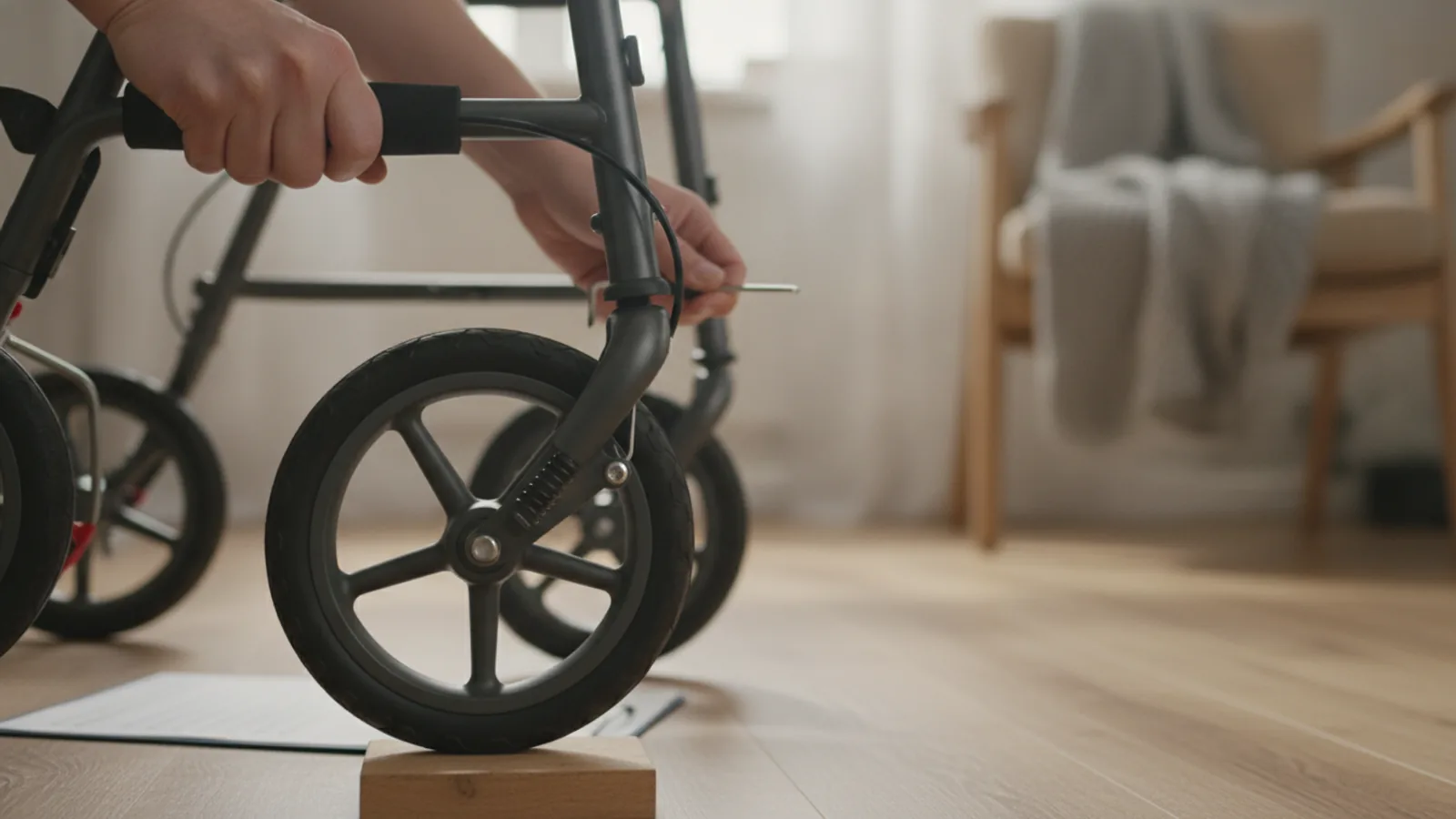
Rollator Brakes Safety Checks
This guide explains how to approach rollator brakes safety checks, including the preparation, practical steps, common mistakes, and final checks that help you finish with confidence.
Before You Start
Step-by-Step Instructions
Quick Reference
| Situation | First Action | Reasoning |
|---|---|---|
| Brake lever feels "spongy" or pulls to the handlebar. | Tighten the barrel adjuster (turn counter-clockwise). | The cable is too loose and needs more tension to engage the brake properly. |
| Brake rubs on the wheel when not in use. | Loosen the barrel adjuster (turn clockwise). | The cable is too tight, causing the brake to be partially engaged at all times. |
| Parking brake does not hold the rollator still. | Perform a major adjustment at the anchor bolt. | The cable is significantly too loose for the parking lock mechanism to fully engage and hold. |
| One brake is much stronger than the other. | Adjust the barrel adjuster on the weaker brake. | The goal is to balance the cable tension so both brakes apply equal pressure simultaneously. |
| Brake makes a grinding or squealing noise. | Clean the brake pad and wheel surface. Inspect pad for wear. | Debris or a worn-out pad can cause noise and reduce braking effectiveness. |
Common Problems When You Perform Rollator Brakes Safety Checks
Problem: The Parking Brake Won't Lock Down
If you push the brake lever down but it won't click into the locked position, the cable is almost always too loose. The lever needs to travel a specific distance to engage the locking pin or catch. If the cable has too much slack, the lever reaches its maximum physical travel before the brake mechanism has moved far enough to lock. The solution is to tighten the cable using either the barrel adjuster for minor issues or the anchor bolt for significant slack.
Problem: Brakes Feel Unresponsive After Adjustment
If you've tightened the cable but the brakes still feel weak, inspect the brake pad itself. A worn, hardened, or glazed pad won't grip the tyre surface effectively, no matter how much pressure is applied. You should also check the tyre pressure if your rollator has pneumatic tyres; an under-inflated tyre can deform under braking pressure, reducing efficiency. Finally, re-inspect the cable for hidden damage or kinks that could be absorbing the force you apply at the lever.
Problem: The Barrel Adjuster is Seized or Won't Turn
Over time, dirt and corrosion can cause the barrel adjuster and its locking ring to seize. Do not use excessive force with pliers, as this can damage the relatively soft metal. Apply a small amount of penetrating oil, let it sit for several minutes, and then gently try again. If it remains stuck, it is safer to perform the adjustment at the anchor bolt and seek professional assistance to free or replace the seized barrel adjuster later.
Advanced Tips for Rollator Brakes Safety Checks
Lubricating Brake Cables
For the smoothest operation, especially on older rollators, you can lubricate the brake cables. This is a more involved task. You must disconnect the cable at the wheel end by loosening the anchor bolt. Then, slide the outer cable housing away from the brake lever to expose the inner wire. Apply a few drops of a dedicated cable lubricant or light machine oil to the inner wire, then slide the housing back and forth to distribute it. This reduces friction, gives a smoother feel at the lever, and can prevent premature wear. Wipe away any excess oil.
Knowing When to Replace Components
Adjustments can compensate for minor cable stretch and pad wear, but they cannot fix worn-out parts. You should plan to replace your brake cables if you see any frayed wires, if the cable is kinked, or if you have tightened the barrel adjuster and anchor bolt to their limits and still cannot achieve proper tension. Brake pads should be replaced when they are worn down to their indicator line (if present) or when they are less than 2-3mm thick. Using components beyond their service life poses a serious safety risk.
Consulting the Manufacturer's Manual
While most rollator loop brakes operate on the same principles, there can be subtle but important differences between brands and models. Your user manual is the definitive source of information. It will contain diagrams specific to your rollator, specify the correct tool sizes, and may include maintenance schedules or warnings unique to your equipment. Always defer to the manufacturer's instructions.
Rollator Brakes Safety Checks FAQ
Final Checklist for Rollator Brakes Safety Checks
FAQ
What should I check before I start?
Check the goal, the key prerequisite, and any current instructions that could change the safest next step for rollator brakes safety checks.
How can I tell whether the result is working?
Use the practical checks in the guide, pause if a required step is unclear, and verify the finished result against the intended outcome.